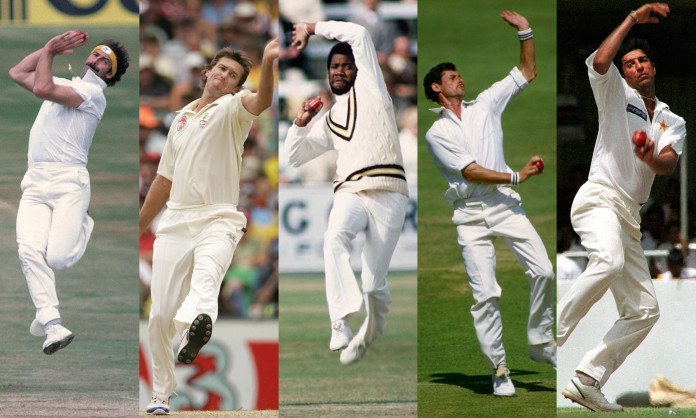
This is the beauty of cricket, a glorious uncertain sport and there is perhaps nothing better than swing bowling which embodies the true spirit of sport. For the day that a fast bowler sends down a ball, swinging through the air, as straight as an arrow in flight, beating even the best batters in the world is pure poetry among poets. The best swing bowler in the world in across formats be it conventional swing, reverse swing or the oh-so-elusive late swing have always known how to alter the tapestry of a Test/ODI/T20.
This article will look at who the greatest swing bowler in history is and / or in current cricket, and celebrate the true legends of the craft. The Salman Butt story may now be just a distant memory but those thousands of overs shaping world cricket surely don’t lie.
What Is Swing Bowling? Understanding the Basics
But before we rank the best swing bowlers, first, we must know what actually is a swing.
In fast bowling, swing is a type of delivery which involves the ball moving through the air either into (inswing) or away from (outswing) the batter. It’s the physics — the state of the ball, seam position, wrist position for a bowler along with atmospheric conditions like humidity and cloud cover.
There are two main types:
- Traditional Swing Bowling: Performed with a new ball with one side shiny and the other fuzzy. Because the shiny side was emitting less airflow, this results in swing to happen towards the rougher side.
- Reverse Swing: A more advanced form using an old ball (over 40 overs, at least). Reverse swing is now moving on the opposite side to standard pace and spins round prey on the batsman who has not expected its radial motion of….
A master craftsman of the art is indeed a bowler who can dominate inswing vs outswing bowling and switch to reverse swing at will.
Greatest Swing Bowlers of All Time
1. James Anderson — The King of Swing
Who is the greatest swing bowler ever when you are asked? One name comes higher than others: James Anderson of England.
Now this goes without saying, James Anderson is the greatest swing bowler Test cricket has ever known. Anderson’s ability to swing the ball both ways, laterally, and at will is virtually unrivaled: No fast bowler has taken more than his 700 Test wickets.
Whereas the crafty stalwart of the cricket field is best known for his late swing Bowling. Anderson, unlike most other bowlers who swing the ball early in its trajectory, makes the ball move at the death right before it reaches to a batter—leaving absolutely no time for him to adjust. The balance of his control between conventional and reverse swing, combined with his seam position and knowledge of atmospheric conditions make him the yardstick against which all current swing bowlers are measured.
Anderson has found success even on the flattest pitches in Asia and Australia, where he continues to trouble the best batters in the world as evidenced by some of his finest performances coming at venues like Lord’s and Old Trafford — both known for creating swing-friendly conditions.
Key Stats:
- 700+ Test wickets
- Best bowling: 7/42
- Career spanning over two decades
- Most Test wickets by a non-spinner
They are the gold standard on swing bowling, studied by coaches and young cricketers around the globe for lessons on how to master this ancient art – James Anderson swing bowling is a case study in itself.
2. Wasim Akram — The Sultan of Swing
If James Anderson is the king of normal swing then Pakistan`s Wasim Akram is the best exponent of reverse swinging bowling.
Wasim Akram is a fast-rhythmic left-wing cricketer, who at all times fills your thoughts after you talk about it. Reverse swing, particularly at speed — Sarfraz was among the best in the art. He bowled an outswinger, a scary inswinger — the reverse of both all in one over. Even knowing what was on the way, batters at the highest level had difficulty picking him up.
The reverse swing with Wasim Akram was an art which his legendary partner Waqar Younis learnt from him. Combined, they made up arguably the greatest fast bowling duo of all time. If Wasim was more of a conventional swinger and reverse swing bowler, Waqar was an expert at yorkers and late inswing at high speed.
Key Stats:
- 414 Test wickets, 502 ODI wickets
- Arguably the best left-arm swing bowler in the world ever
- Multiple match-winning performances in World Cups and Test series
3. Waqar Younis — The Master of Reverse Swing Yorkers
Waqar Younis was the partner-in-crime of Wasim Akram and one of the most dangerous swing bowlers in cricket history. There was an extraordinary ability to bowl late inswing at express pace — and hold it with devastating reverse swing yorkers, fast bowler Waqar Younis revolutionized the order of working up speed as a livestock.
Waqar was almost unplayable at his peak. With reverse swing and a talent for toe-crushing yorkers, few could make the old ball talk like he could, making him one of the most feared death bowlers cricket history has ever known.
4. Dale Steyn — The Best Swing Bowler of the Modern Era (Pre-Anderson Peak)
Dale Steyn (South Africa) — Dale Steyn is always cited in any list of all-time great fast bowlers and as one of the best of modern times, his ability with a swinging ball and raw pace made him particularly deadly.
Dale Steyn swung the ball with raw pace and steep outswing. And he swung the ball at 145 km/h, which few bowlers on the planet can match. Steyn swung the ball at gas-pedal pace so that by the time a batter had processed its movement, it was through him.
Steyn was one of the greatest swing bowlers that Test cricket has ever seen and his record of over 400 Test wickets at a stunning average stand as confirmation.
5. Zaheer Khan — India’s Finest Swing Bowler
Though India has never been a country known for swing bowling, Zaheer Khan redefined that narrative altogether.
The bowling of Zaheer Khan inswing outswing was a boon for Indian Cricket. Zaheer at his prime was capable of swinging the ball both ways, using reverse swing with the old ball and utilising the conditions at venues across the globe. He performed especially well in England — swinging the ball on conducive surfaces and challenging even the most accomplished English batters on home soil.
Zaheer’s guile made him a master of swing in white-ball cricket too, as his brilliant 2011 World Cup campaign underlined.
6. Other Legendary Swing Bowlers
No discussion of the best swing bowlers ranked in cricket history would be complete without mentioning:
- Sir Richard Hadlee (New Zealand): A master of swing and seam, Hadlee was the first bowler to take 400 Test wickets.
- Glenn McGrath (Australia): Not a classical swing bowler, but his ability to move the ball off the seam and extract subtle swing made him lethal.
- Imran Khan (Pakistan): A pioneer of reverse swing who was one of the architects of the technique that later Wasim and Waqar perfected.
- Ian Botham (England): A brilliant swing bowler who could move the ball both ways and was one of cricket’s greatest all-rounders.
Also read this: Who Scored 200 in T20 Cricket | Virat Kohli Bat Weight in KG | How Many Bouncers Are Allowed
Best Swing Bowler in Current Cricket (2024–2025)
So coming to the question of who the best swing bowler in current cricket is here are a few names.
James Anderson (Retired Test career in 2024)
Anderson finally hung his boots up in Test cricket after a legendary farewell in 2024, but he remains the greatest swing bowler ever to grace the game. He still is the benchmark around which all future swing bowlers will be assessed against.
Trent Boult (New Zealand)
There is no bowler swinging the ball like Trent Boult does in this day and age. With a secure high action, can swing the ball both ways and in all conditions has sharp inswing and excellent outswing making him devastating. His numbers in Test cricket, IPL and ODIs assert he is the best swing bowling artist of his era.
Mohammed Shami (India)
Mohammed Shami is India’s best swing bowler today. The man who has been working on his seam position and bringing reverse swing at the middle overs in an ODI as effectively shown during India’s 2023 World Cup journey being a bowler with world-class swing talent all the format promised.
Mark Wood & Ollie Robinson (ENG)
The current crop of England fast bowlers are more steady swing operators Mark Wood and Ollie Robinson. Especially Robinson, who has performed extraordinarily well in terms of both in the air and off the seam, in Test cricket.
Swing Bowling Tips: What Makes the Best Swing Bowlers Different
Here are some common characteristics that set the best swing bowlers apart from regular fast bowlers in cricket:
- Seam Position: The seam must be held in the air to attain the most swing. Scrambled seam decreased air movement.
- Wrist Position:- Minor shifts in wrist position enable the bowler to bowl inswing or outswing at will.
- Shine Maintenance: To achieve conventional swing you need to keep one surface shiny and let the other side roughen up.
- Swing Bowling is an Art of Patience and Discipline And the best swing bowlers do just that by always bowling in areas where the batter has to play at every ball.
- Effect of Conditions: Cloud cover, humidity and the ball age affecting swing. For the most part, the most astute of swing bowlers read conditions like no one else.
- Variation: A good swing bowler becomes a great one by his ability to bowl inswing, outswing and reverse swing all in the same spell — with bamboozling execution on which is coming.
Best Swing Bowler in Test Cricket vs ODI Cricket
Also, swing in Test cricket is not the same as swing bowling in ODIs.
Test cricket is a different kettle of fish, where the poorer ball can be given time to work on it and conditions change over longer periods. Most effective are swing bowlers who can capitalize on conditions favorable early in the innings before reverse-swinging later with a rightfully aged ball.
The ODI format throws faster games and its white ball performs another way. The ball moves more around 1st innings with the exception that it is two balls (1 at each end) so reverse swing is very rare! Even the most accomplished ODI cricket swing bowler must bowl with the new ball and frequently incorporate variations in pace.
Also, James Anderson’s tally is the most for a swing bowler, and Wasim Akram’s ODI wickets help him master across formats.
Why Swing Bowling Is a Dying Art — And Why It Still Matters
Compared to the flat pitches, high-scoring matches argument of T20 age, some critics have gone as far as to say that swing bowling is a dead ball art. In subcontinental conditions, flat strips barely provide swing and batter-friendly rules have made it harder for any bowler to gain rhythmic advantage over the opponent.
But in Test cricket, swing bowling continues to be as pertinent and thrilling as it has ever been. But, with venues such as Lord’s, The Oval, Headingley, Edgbaston or grounds in New Zealand and South Africa still offering great swinging conditions. When a world-class swing bowler dinners it up in those conditions, though, it’s still one of the biggest spectacles in all of cricket.
With legends like Anderson, Akram and Waqar being analysed the world over and their craft continuing to inspire generations of swing bowlers from Trent Boult to Mohammed Shami — you can be assured that this art form isn’t going anywhere.
Conclusion
The best swing bowlers of all time and the best in current cricket have been explored before, but the answers depend on the generation.
The best swing bowler of all time: Wasim Akram for his ability to swing the ball both conventionally and reverse-swing – in all formats – & James Anderson only due to the sheer volume of wickets taken every Test.
- Best swing bowler in cricket history: Wasim Akram for his mastery of conventional and reverse swing across all formats, and James Anderson for the sheer volume and consistency of his wicket-taking in Test cricket.
- Best swing bowler in Test cricket: James Anderson — no debate.
- Best swing bowler in current cricket: Trent Boult, with Mohammed Shami a close second.
- Best reverse swing bowler ever: Wasim Akram and Waqar Younis — a pair that may never be matched.
Cricket has always served us goosebump-inducing masterstroke masterpieces of swing bowling over the years. From the mystical final-over spells in World Cups from Wasim Akram to James Anderson’s art of swing at Lord’s these artists represented what bowling beautifully — and devastatingly — truly meant.
For as long as cricket is around, the world will continue to produce and honour the best swing bowlers. But when the ball passes through the air and clips the top of off stump, rendering even your finest batter dumbstruck, there is simply nothing in all sport more glorious.
FAQs
Q1: Who is the best swing bowler in the world of all time?
James Anderson of England is widely regarded as the best swing bowler in Test cricket history, with over 700 Test wickets. However, Wasim Akram of Pakistan is considered the greatest reverse swing bowler of all time, making both strong contenders for the title of the greatest swing bowler ever.
Q2: What is the difference between conventional swing and reverse swing bowling?
Conventional swing is achieved with a new ball — the shiny side cuts through the air less, causing the ball to swing toward the rough side. Reverse swing occurs with an older ball (40+ overs) and moves in the opposite direction to conventional swing, making it extremely difficult for batters to predict and play.
Q3: Who is the best swing bowler in current cricket?
New Zealand’s Trent Boult is considered the best swing bowler in current cricket, with his ability to swing the ball both ways at consistent pace. India’s Mohammed Shami is a close second, particularly known for his deadly reverse swing in ODI cricket.
Q4: Which conditions are best for swing bowling in cricket?
Swing bowling is most effective in overcast, cloudy, and humid conditions, as moisture in the air helps the ball move. Venues in England, New Zealand, and South Africa — such as Lord’s, Headingley, and Newlands — are famous for offering ideal swing bowling conditions.
Q5: Who is the best reverse swing bowler in cricket history?
Wasim Akram and Waqar Younis of Pakistan are jointly considered the greatest reverse swing bowlers in cricket history. They pioneered and perfected the art of reverse swing in the late 1980s and 1990s, making Pakistan’s pace attack one of the most feared in the world.
Q6: What are the key tips to bowl swing in cricket?
The key tips for effective swing bowling include holding the seam upright, maintaining the shine on one side of the ball, using the right wrist position for inswing or outswing, bowling in disciplined lines and lengths, reading atmospheric conditions, and developing the ability to bowl both conventional and reverse swing to keep batters guessing.