Football is faster than ever. Modern players are expected to cover huge distances, explode into space, recover defensively and make repeated high-speed runs throughout a match. For wingers, full-backs and forwards in particular, raw pace can completely change how a team attacks and defends.
The phrase Fastest Football Players 2026 can refer to different types of speed data. A player’s maximum recorded speed in one match is not necessarily the same as his acceleration, average sprint speed or overall athletic ability. Tracking systems also differ between competitions.
For that reason, there is no single universal database containing every professional footballer’s top speed. This article uses official competition-tracking data where available, particularly from the Premier League, UEFA Champions League and Bundesliga, and treats the figures as recorded top speeds rather than a definitive worldwide ranking. For example, the Premier League’s official 2025/26 data recorded Jackson Tchatchoua at 37.30 km/h, while UEFA’s early 2026/27 Champions League statistics list Carlos Forbs at 36.6 km/h, Kylian Mbappé at 36.4 km/h and Erling Haaland at 36.0 km/h.
Quick Facts: Fastest Football Players 2026
| Player | Club | Position | Recorded Top Speed | Competition/Data |
| Micky van de Ven | Tottenham Hotspur | Centre-back | 37.38 km/h | Premier League all-time |
| Kyle Walker | Manchester City | Full-back | 37.31 km/h | Premier League all-time |
| Jackson Tchatchoua | Wolverhampton Wanderers | Wing-back | 37.30 km/h | Premier League 2025/26 |
| Jean-Mattéo Bahoya | Eintracht Frankfurt | Forward | 37.16 km/h | Bundesliga record |
| Carlos Forbs | Club Brugge | Forward | 36.6 km/h | Champions League 2026/27 |
| Kylian Mbappé | Real Madrid | Forward | 36.4 km/h | Champions League 2026/27 |
| Erling Haaland | Manchester City | Striker | 36.0 km/h | Champions League 2026/27 |
| Bradley Barcola | Liverpool | Winger | 35.93 km/h | Premier League 2026/27 |
| Sheraldo Becker | Real Sociedad | Forward | 36.58 km/h | Bundesliga 2026/27 |
| Oliver Burke | Union Berlin | Forward | 37.00 km/h | Bundesliga 2025/26 |
Also read this: Most Penalty Goals in Football History | Most Clean Sheets in Football History | Most Yellow Cards in Football History
Fastest Football Players 2026 – Top 10
1. Micky van de Ven
Micky van de Ven has one of the most remarkable speed records among elite defenders. The Tottenham Hotspur centre-back reached 37.38 km/h against Brentford on 31 January 2024, according to Premier League data. That remains the fastest speed recorded in the Premier League since Opta’s tracking data began in the 2020/21 season. His record is particularly notable because he is a central defender rather than a traditional winger or striker.
Van de Ven’s pace is extremely useful when Tottenham defend with a high defensive line. When an opponent breaks through midfield, his acceleration allows him to recover ground rapidly and challenge attackers who would otherwise have a clear path toward goal. His speed also helps him defend large spaces behind the defensive line, making pace an important part of his overall defensive profile.
2. Kyle Walker
Kyle Walker has long been associated with elite sprinting ability. He recorded 37.31 km/h for Manchester City against Everton in May 2023, placing him just behind Van de Ven on the Premier League’s all-time speed list. Walker has traditionally used his pace as both an attacking and defensive weapon. As a full-back, he can support attacks and then quickly return to his defensive position. His speed has been particularly valuable against fast wingers, where recovery runs can make the difference between a dangerous counter-attack and a successfully stopped attack.
3. Jackson Tchatchoua
Jackson Tchatchoua emerged as one of the standout speedsters of the 2025/26 Premier League season. The Wolverhampton Wanderers wing-back recorded 37.30 km/h against Everton on 30 August 2025, making it the fastest Premier League speed of that season and the third-fastest recorded in Premier League history at the time. He also reached 36.97 km/h against Crystal Palace.
His performances demonstrate why wing-backs can be particularly prominent in speed statistics. They regularly make long runs along the touchline and have opportunities to build up considerable momentum.
4. Jean-Mattéo Bahoya
Jean-Mattéo Bahoya holds the Bundesliga’s recorded speed record at 37.16 km/h. The French youth international achieved the mark while playing for Eintracht Frankfurt during the 2024/25 Bundesliga campaign. Bundesliga records identify the sprint as the first time a player in the competition had crossed the 37 km/h barrier. Bahoya’s record is an excellent example of how young players with explosive acceleration can quickly become notable names in football speed statistics.
5. Carlos Forbs
Carlos Forbs is another name attracting attention in 2026. UEFA’s current Champions League statistics list the Club Brugge forward at 36.6 km/h, the fastest recorded top speed in the competition’s 2026/27 statistics at the time of the data snapshot.
Forbs is a forward who can use speed to attack space behind defensive lines. His pace becomes especially dangerous when he receives the ball in wide areas with room to run. It is important to distinguish the current Champions League ranking from an all-time football ranking. UEFA’s figure represents the current competition data rather than every speed ever recorded in professional football.
6. Kylian Mbappé
Kylian Mbappé remains one of the world’s most recognizable examples of elite football pace. UEFA’s 2026/27 Champions League statistics currently record Mbappé at 36.4 km/h, placing him among the competition’s fastest players. UEFA’s individual statistics also list a top speed above 36 km/h.
Mbappé’s threat comes from more than maximum speed. His first few steps, changes of direction and ability to accelerate while controlling the ball allow him to attack defenders in several different ways. His pace is particularly valuable during transitions, when Real Madrid can move from defence to attack quickly.
7. Erling Haaland
Erling Haaland is often discussed primarily for his finishing and physical strength, but his speed is another important part of his game. UEFA’s 2026/27 Champions League statistics currently record Haaland at 36.0 km/h, putting him among the competition’s fastest players.
The combination of height, strength and pace makes Haaland difficult to defend when he has space in front of him. He does not need to play exclusively as a traditional target striker; he can also attack space behind defenders. His Premier League speed data reinforces that point. He reached 36.20 km/h against Arsenal in April 2026, the fastest individual speed recorded by Manchester City in the 2025/26 league campaign.
8. Bradley Barcola
Bradley Barcola began his Premier League career with an immediate display of speed. After joining Liverpool from Paris Saint-Germain, Barcola recorded 35.93 km/h during Liverpool’s 2–0 win over Ipswich Town in September 2026. The Premier League reported that it was the fastest speed recorded in the competition during the 2026/27 season at that point.
His explosive acceleration gives Liverpool another option when attacking space. Barcola can stretch defensive lines, carry the ball forward and create situations where defenders have to retreat. The figure is also a reminder that seasonal speed tables can change quickly as more matches are played.
9. Sheraldo Becker
Sheraldo Becker has also appeared near the top of current Bundesliga speed statistics. The Bundesliga’s 2026/27 statistics list Becker with a top speed of 36.58 km/h, ahead of Adam Daghim and Tidiam Gomis in the current speed table. Becker’s pace is particularly useful in wide and transition situations. Players with this type of speed can turn a loose ball into a counter-attacking opportunity within seconds.
10. Oliver Burke
Oliver Burke has established a reputation as one of the Bundesliga’s quickest players. The Bundesliga’s historical speed data lists Burke at 37.00 km/h, while its 2025/26 season coverage recorded him at 36.01 km/h during that campaign. His 37.00 km/h mark puts him among the fastest players recorded in Bundesliga history and demonstrates why speed can remain an important asset even when a player’s primary role is that of a forward.
Fastest Football Players by Top Speed
The following table combines notable verified figures from different competitions rather than pretending that all numbers were measured during the same season.
| Player | Top Speed | Club at Recording | Position | Competition |
| Micky van de Ven | 37.38 km/h | Tottenham | Centre-back | Premier League |
| Kyle Walker | 37.31 km/h | Manchester City | Full-back | Premier League |
| Jackson Tchatchoua | 37.30 km/h | Wolves | Wing-back | Premier League |
| Jean-Mattéo Bahoya | 37.16 km/h | Eintracht Frankfurt | Forward | Bundesliga |
| Oliver Burke | 37.00 km/h | Union Berlin | Forward | Bundesliga |
| Carlos Forbs | 36.60 km/h | Club Brugge | Forward | Champions League |
| Sheraldo Becker | 36.58 km/h | Real Sociedad* | Forward | Bundesliga data |
| Kylian Mbappé | 36.40 km/h | Real Madrid | Forward | Champions League |
| Erling Haaland | 36.20 km/h | Manchester City | Striker | Premier League |
| Bradley Barcola | 35.93 km/h | Liverpool | Winger | Premier League |
Fastest Premier League Players 2026
The Premier League provides some of the clearest publicly available speed data. During the completed 2025/26 Premier League season, Jackson Tchatchoua produced the fastest sprint at 37.30 km/h. Gabriel Martinelli reached 36.74 km/h, Djed Spence 36.62 km/h and Destiny Udogie 36.41 km/h. Anthony Elanga, Bryan Mbeumo, Pedro Neto and William Osula were also among the fastest players.
The league’s official historical data also shows that Micky van de Ven holds the Premier League record at 37.38 km/h, followed by Kyle Walker at 37.31 km/h and Tchatchoua at 37.30 km/h. The early 2026/27 season has introduced another name at the top: Liverpool’s Bradley Barcola reached 35.93 km/h, ahead of Bryan Mbeumo at 35.36 km/h.
Fastest Premier League Forwards
Fast forwards such as Mbeumo, Elanga, Haaland and Osula can use pace to attack the space behind defenders.
Fastest Premier League Wingers
Wingers often dominate speed tables because their role gives them opportunities to sprint into open spaces. Martinelli, Neto, Gordon, Barcola and Mbeumo are examples of players whose pace can influence attacking transitions.
Fastest Premier League Defenders
Van de Ven and Walker show that defensive players can also reach extraordinary speeds. Their ability to recover position is especially valuable against counter-attacking teams.
Fastest Players in European Football
Speed statistics differ considerably across Europe’s major competitions.
Premier League
The Premier League’s 2025/26 data recorded several players above 36 km/h, led by Tchatchoua at 37.30 km/h.
Bundesliga
The Bundesliga has its own impressive speed records. Jean-Mattéo Bahoya’s 37.16 km/h remains the competition’s recorded all-time benchmark, while the 2025/26 season also featured Oliver Burke, Ricky-Jade Jones, Yan Diomande and others among the fastest players.
UEFA Champions League
Current 2026/27 UEFA Champions League data lists Carlos Forbs at 36.6 km/h, Mbappé at 36.4 km/h and Haaland at 36.0 km/h.
Serie A
Serie A uses a different approach for its official Frecciarossa Speed Award. In 2025/26, Cagliari’s Marco Palestra won the award with an average sprint speed of 27.96 km/h, ahead of Rasmus Højlund at 27.92 km/h and Dodô at 27.77 km/h.
This illustrates why readers should not directly compare every league’s speed award. A maximum speed measurement and an average sprint speed are different statistics.
Ligue 1
Ligue 1 also publishes sprint-speed data. During 2025/26, Alimami Gory was recorded at 36.32 km/h, while Luca Koleosho reached 35.96 km/h and entered the league’s top 10 seasonal sprint performances.
Fastest Young Football Players in 2026
Young players are increasingly appearing in elite speed statistics.
- Jean-Mattéo Bahoya’s Bundesliga record is a major example. He was only 19 when he recorded 37.16 km/h, making his performance particularly notable among young European footballers.
- The current Bundesliga 2025/26 speed list also featured 19-year-old Bazoumana Touré at 35.98 km/h, while Yan Diomande recorded 36.30 km/h.
Speed alone does not determine whether a young footballer becomes an elite player. Technique, decision-making, fitness, tactical understanding and consistency remain essential.
Fastest Footballers by Position
Fastest Wingers
Wingers frequently appear near the top of football speed rankings. Their position naturally provides open-field situations where they can build momentum.
Players such as Barcola, Martinelli, Elanga and Mbeumo combine pace with dribbling and direct attacking movements.
Fastest Strikers
Strikers can use speed differently from wingers. Instead of simply running down the touchline, they often sprint between centre-backs or attack through balls.
Haaland is a strong example of a striker whose physical profile combines size, strength and speed.
Fastest Full-Backs
Full-backs and wing-backs regularly make repeated long-distance runs. Tchatchoua and Walker demonstrate how important pace can be in this position.
Fastest Centre-Backs
Micky van de Ven is perhaps the clearest modern example. His 37.38 km/h Premier League record shows that centre-backs can possess elite sprinting ability.
Fastest Midfielders
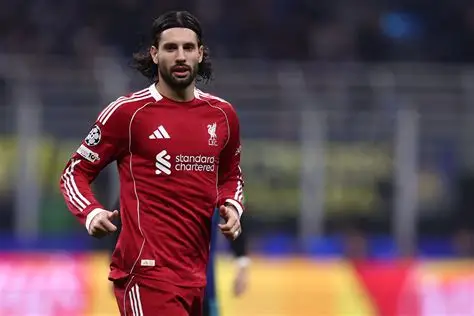
Midfielders generally do not dominate maximum-speed rankings because they spend more time operating centrally and making shorter movements. However, players such as Dominik Szoboszlai have demonstrated that midfielders can also produce elite sprint speeds. His 36.76 km/h mark appears in the Premier League’s historical top-speed list.
How Is Football Player Speed Measured?
Modern football uses sophisticated tracking technology to measure physical performance.
GPS Tracking
GPS-based systems can record movement, distance, acceleration and high-speed running during training and matches.
Match-Tracking Systems
Professional competitions use optical tracking and other technologies to monitor player movement. These systems can generate detailed physical-performance data.
Maximum Sprint Speed
Maximum speed represents the highest velocity a player reaches during a measured period. A player might record 36 km/h for only a brief moment. That does not mean he can maintain 36 km/h for an entire sprint.
Distance Covered at High Speed
Another useful measurement is how much distance a player covers while running above a particular speed threshold.
Acceleration
Acceleration measures how quickly a player increases speed. This is often more important in football than maximum speed alone.
Why Figures Can Differ
Different competitions may use different tracking systems, definitions and reporting methods. Therefore, a 36 km/h figure from one competition should not automatically be treated as directly equivalent to a 36 km/h figure from another.
Top Speed vs Acceleration in Football
Top speed is the maximum velocity reached by a player.
Acceleration is how quickly the player reaches that speed.
Consider two players:
- Player A reaches 36 km/h but needs a long distance to reach it.
- Player B reaches 34 km/h extremely quickly.
In a match situation, Player B could sometimes be more effective because football rarely provides unlimited space for a player to reach maximum velocity.
This is why terms such as football player top speed, explosive pace and acceleration should not be treated as interchangeable.
Fastest Football Player Ever Recorded
There is no universally accepted single fastest football player ever recorded across every professional competition because historical tracking data is incomplete and different competitions have used different systems. Modern official competition records provide more reliable comparisons within individual leagues.
In the Premier League, Micky van de Ven’s 37.38 km/h is the fastest recorded since Opta began tracking this type of data in 2020/21. Kyle Walker’s 37.31 km/h and Jackson Tchatchoua’s 37.30 km/h follow on the league’s historical list. In the Bundesliga, Jean-Mattéo Bahoya’s 37.16 km/h is the current recorded league record. These records are more useful than unsupported claims that a particular player is the fastest footballer in history because they identify the competition, tracking period and measurement.
Fastest Football Players 2026 vs Previous Years
| Season/Period | Player | Recorded Speed | Competition |
| 2023/24 | Micky van de Ven | 37.38 km/h | Premier League |
| 2022/23 | Kyle Walker | 37.31 km/h | Premier League |
| 2025/26 | Jackson Tchatchoua | 37.30 km/h | Premier League |
| 2024/25 | Jean-Mattéo Bahoya | 37.16 km/h | Bundesliga |
| 2025/26 | Oliver Burke | 37.00 km/h | Bundesliga |
| 2026/27 | Carlos Forbs | 36.6 km/h | Champions League |
| 2026/27 | Kylian Mbappé | 36.4 km/h | Champions League |
| 2026/27 | Erling Haaland | 36.0 km/h | Champions League |
| 2026/27 | Bradley Barcola | 35.93 km/h | Premier League |
Final Thoughts
The Fastest Football Players 2026 landscape shows that elite pace is no longer limited to traditional wingers. Centre-backs such as Micky van de Ven, full-backs such as Kyle Walker, wing-backs such as Jackson Tchatchoua and forwards such as Mbappé and Haaland all demonstrate how speed can influence different parts of the game.
Official competition data gives us some remarkable numbers. Van de Ven’s 37.38 km/h remains the Premier League’s recorded benchmark, while Tchatchoua reached 37.30 km/h during 2025/26. The Bundesliga record stands at 37.16 km/h through Bahoya, while current Champions League data has Carlos Forbes, Mbappé and Haaland among its leading speed performers. At the same time, maximum speed is only one part of football athleticism. Acceleration, agility, stamina, repeated sprint ability and the capacity to use pace at the right moment can be just as important.
As more leagues publish advanced tracking data, the list of the fastest footballers by speed will continue to evolve, giving fans an increasingly detailed picture of just how quickly elite footballers can move.
FAQs
Q1. Who is the fastest football player in 2026?
There is no single universally accepted worldwide ranking because competitions use different tracking systems and seasons. In the Premier League, Micky van de Ven holds the recorded historical top speed at 37.38 km/h. In the current 2026/27 Champions League data, Carlos Forbs leads the published top-speed table at 36.6 km/h.
Q2. Who is the fastest soccer player in the world?
The answer depends on the competition and measurement period. Official records show several players exceeding 37 km/h in major European competitions, including Van de Ven, Walker, Tchatchoua and Bahoya.
Q3. What is the highest speed recorded by a football player?
Among the major competition records discussed here, Micky van de Ven’s 37.38 km/h is the fastest recorded Premier League speed since Opta tracking began in 2020/21.
Q4. Who is the fastest Premier League player in 2026?
For the completed 2025/26 season, Jackson Tchatchoua recorded the fastest speed at 37.30 km/h. In the early 2026/27 season, Bradley Barcola led the Premier League with 35.93 km/h at the time of the September 8, 2026 update.
Q5. Who is the fastest young footballer in 2026?
Jean-Mattéo Bahoya is one of the strongest examples in the available official data. The young Eintracht Frankfurt player recorded 37.16 km/h, which became the Bundesliga’s speed record.
Q6. Which football position requires the most speed?
There is no single position that universally requires the most speed. Wingers, full-backs, wing-backs and forwards frequently need explosive pace, while centre-backs can also benefit greatly from recovery speed.
Q7. Is top speed the same as acceleration?
No. Top speed is the maximum velocity a player reaches, while acceleration measures how quickly the player reaches a particular speed. Both are important but describe different physical qualities.
Q8. How is a footballer’s speed measured?
Professional competitions use tracking technologies to measure player movement. Depending on the system, data can include maximum speed, sprint distance, high-speed running and acceleration. UEFA, the Premier League and Bundesliga all publish player-performance statistics using their respective tracking systems.