
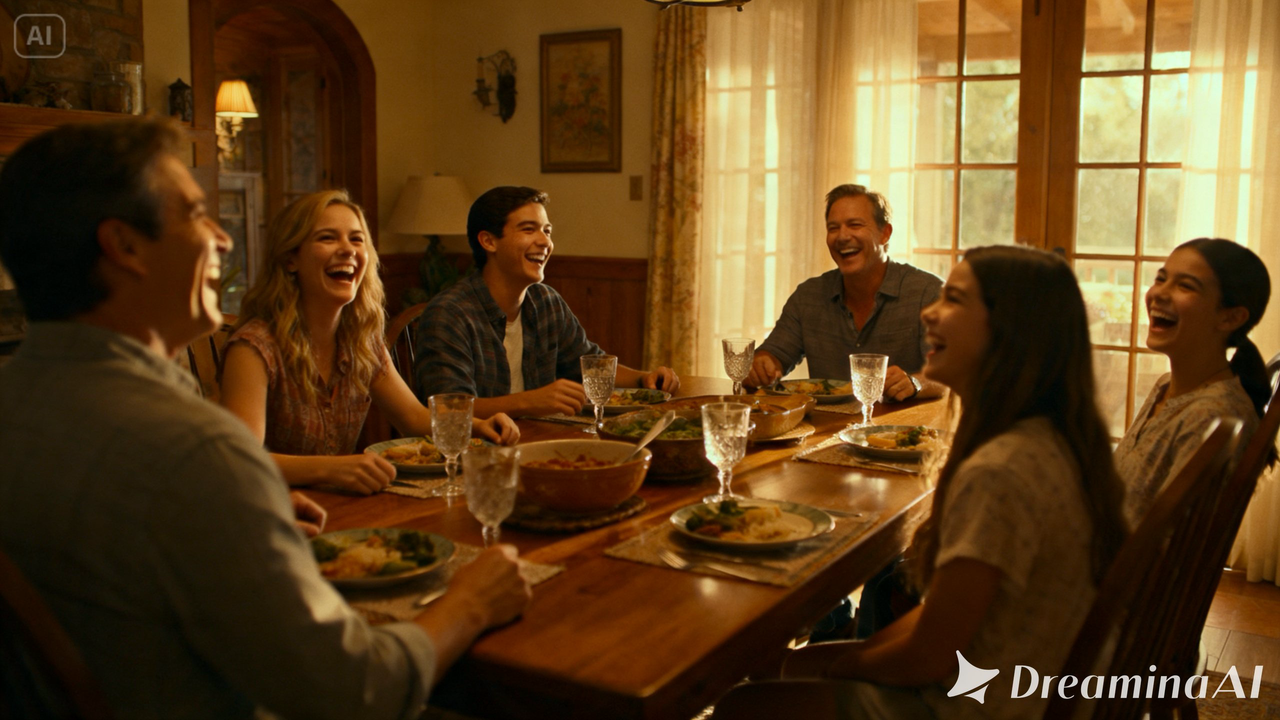
Some photos carry more weight than others — a candid shot from a birthday, a quiet moment at a family dinner, a picture someone took without even planning to keep it forever. Those photos deserve more than sitting flat in a folder somewhere. Image to video tools now make it possible to take one of those still memories and give it a small amount of motion, turning a frozen instant into something that feels a little closer to actually being back in that room. Dreamina, powered by its most advanced video generation model, Seedance 2.5, gives anyone the ability to do this without needing editing skills or expensive software.
Why a memory feels different in motion
A photo captures an expression, but a memory usually includes what happened just before and after it — the laugh building, a hand reaching for something, someone turning to say one more thing. Adding even a small amount of motion brings back a sliver of that surrounding moment instead of just the single frame that got captured.
What makes an animated memory feel respectful rather than strange
A few things separate a moving memory that feels warm from one that feels unsettling. The motion should stay small and believable — a blink, a slight smile shift, a head turning gently — rather than anything exaggerated. Lighting and color need to stay true to how the photo actually looked, since anything too polished can feel like it’s replacing the memory instead of honoring it. And the pace should feel slow and quiet, closer to a held moment than an active scene.
Bringing your photo to life with Dreamina
Step 1: Upload your photo and describe the moment
Get into Dreamina and find the “AI Video” section, then use “Add reference image” to bring in your photo. From there, describe the small motion you want to see.
Here’s an example built for a 30-second clip: “Using this dinner table photo as reference, generate a 30-second video where everyone’s expressions shift naturally, one person leans back laughing, glasses and dishes stay still, and warm light flickers gently as if from a nearby candle.”
Step 2: Generate with Seedance 2.5
Choose the Seedance 2.5 model, set your video length, then pick an aspect ratio — 9:16 for a phone-friendly keepsake, 16:9 if it’s meant for a larger screen or slideshow. Tap Dreamina’s generate icon and let the memory come alive.
Step 3: Refine and export the finished piece
Run it through Dreamina’s editing tools — Upscale sharpens fine facial detail, Generate Soundtrack adds a gentle audio layer if it fits — then export and keep it somewhere it’ll actually get watched again.
What Seedance 2.5 brings to memory-based motion
Seedance 2.5, Dreamina’s most advanced video generation model, handles the kind of careful, restrained motion this category depends on more than almost any other.
Faces that stay recognizably themselves
Reference handling preserves the exact features and expression of each person in the photo, which matters enormously here since even a small drift can make a memory feel like it’s showing someone slightly different.
No unwanted duplicates in a group shot
Fixes for the recurring “twin” issue keep group photos with several people from producing look-alike duplicates, a problem that used to show up often in busier family shots.
Local fixes without redoing the whole photo
A single detail — a stray hand, an object in the background — can be adjusted through local editing without regenerating the entire clip.
A softer, more natural finish
Reduced “AI look” keeps skin tone, lighting, and texture feeling like a real photograph rather than something synthetic, which is often the difference between a memory that feels comforting and one that feels off.
Deciding how much movement a memory actually needs
Less is almost always better here. A photo that already carries strong emotion usually only needs the smallest amount of motion to feel alive — a blink, a shift in gaze, a breath. Adding more than that risks turning a meaningful photo into something that looks performed rather than remembered, which defeats the point of doing this at all.
Dealing with photographs that feature multiple subjects
For a photograph that features two or three people, a slightly different strategy is needed as adding motion to one but not to the other would create an imbalance very quickly. It’s best to try to explain the action taking place in terms of something that’s happening collectively for all those people — a joke that made all people at the table laugh, not the reaction of an individual. This way, the people will remain unified in their movement as opposed to being animated individually.
Writing prompts that protect the original feeling
Naming the specific, small motion you want, rather than a full scene, keeps the result feeling like an extension of the photo instead of a replacement for it.
Choosing the right pace and length
A short, quiet clip of ten to fifteen seconds usually suits a personal memory best, since the goal is a brief glimpse rather than a full narrative moment stretched out longer than it needs to be.
A few habits worth avoiding
Some choices tend to work against the intended effect:
- Adding motion to every person in a group photo instead of keeping it selective
- Choosing a blurry or low-resolution source photo as the reference
- Overloading the prompt with actions that never actually happened in real life
- Skipping sound entirely when a soft ambient layer would have added warmth
Where these animated memories tend to be used
Memorial tributes, anniversary gifts, family archives, and personal keepsakes are where this format shows up most often, since a photo that moves gently tends to mean more to the people who were actually there than one that stays perfectly still.
A still photo was always holding onto more than it could show. Seedance 2.5, running through Dreamina, is what finally lets a small piece of that moment move again, gently enough to still feel like the memory it always was.