
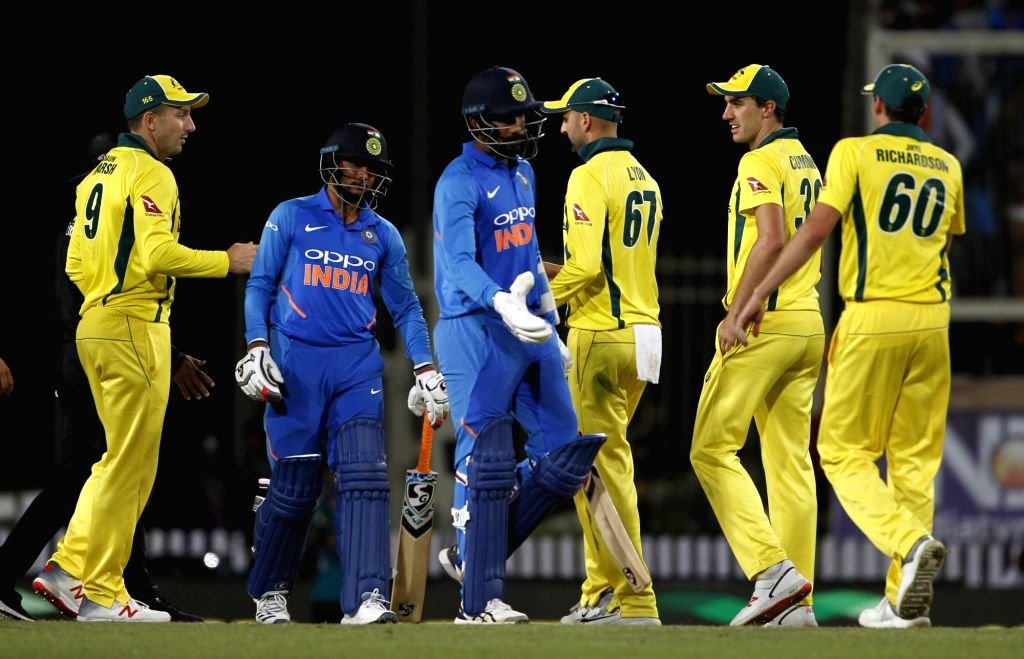
The Australian men’s cricket team vs India national cricket team timeline is a story of changing cricketing eras, legendary players, dramatic Test matches and some of the biggest games in international cricket. What began with India’s first Test tour of Australia in 1947–48 has developed into one of the sport’s most closely followed rivalries.
Australia and India have faced each other in Tests, One-Day Internationals and T20 Internationals, as well as in major ICC tournaments. The rivalry has produced memorable names such as Don Bradman, Sunil Gavaskar, Sachin Tendulkar, Steve Waugh, Ricky Ponting, VVS Laxman, Rahul Dravid, Virat Kohli, Steve Smith, Jasprit Bumrah and Nathan Lyon.
The Border-Gavaskar Trophy has become the central prize in the Test rivalry, while World Cup meetings have added another layer to the competition. Australia defeated India in the 2003 and 2023 World Cup finals, while India eliminated Australia in the 2011 quarter-final and has also enjoyed historic Test victories on Australian soil.
The modern rivalry is particularly notable because neither team is satisfied with simply winning a bilateral series. Australia and India regularly compete for major ICC titles, World Test Championship qualification and supremacy in international cricket.
This complete timeline looks at the rivalry from its beginning in 1947–48 through the modern era, including important Test series, ODI and T20I encounters, World Cup matches, the Border-Gavaskar Trophy and some of the greatest individual performances in Australia vs India cricket history.
Quick Facts: Australia vs India Cricket Rivalry
| Category | Details |
| Teams | Australia and India |
| First Test meeting | 1947–48 |
| Formats | Tests, ODIs and T20Is |
| Major Test trophy | Border-Gavaskar Trophy |
| Major ICC meetings | ODI World Cup, T20 World Cup, World Test Championship and other ICC events |
| Rivalry | One of international cricket’s biggest modern rivalries |
The two teams first met in a Test series during India’s 1947–48 tour of Australia. Since then, the rivalry has moved through several generations and has become much more competitive, particularly from the 1990s onward.
Australian Men’s Cricket Team vs India National Cricket Team Timeline: How the Rivalry Began
1947–48: The First Australia vs India Test Series
The history of Australia vs India cricket begins with India’s first Test tour of Australia in 1947–48. It was a completely different cricketing world. India had gained independence only months earlier, and the national team was still developing its identity in international cricket. Australia, meanwhile, possessed one of the strongest sides in the world, led by the legendary Don Bradman. The series gave Indian cricket an early opportunity to test itself against one of the most powerful teams of the era.
Australia won the series convincingly, but the importance of the tour went beyond the final result. It established the foundation for a cricketing relationship that would eventually become one of the most important rivalries in world cricket.
Also read this: Bangladesh Premier League 2026 | New Zealand National Cricket Team vs South Africa National Cricket Team Timeline | Bangladesh National Cricket Team vs Pakistan National Cricket Team Timeline
Australia vs India 1947–48 Test Series
| Match | Venue | Winner | Margin |
| 1st Test | Brisbane | Australia | Australia won |
| 2nd Test | Sydney | Australia | Australia won |
| 3rd Test | Melbourne | Australia | Australia won |
| 4th Test | Adelaide | Australia | Australia won |
| 5th Test | Melbourne | Australia | Australia won |
Australia dominated the series, but India gained valuable experience against a team featuring some of the greatest cricketers of that generation.
That first tour is therefore an important starting point for the Australian men’s cricket team vs India national cricket team timeline.
Australia vs India Timeline by Decade
Australia vs India in the 1950s
The 1950s were still largely a Test-cricket era for the two teams. One-Day International cricket did not yet exist, and T20 cricket was many decades away. India continued to develop as a Test nation while Australia remained one of the dominant sides in world cricket.
The contests during this period were important for building India’s experience against top-quality Australian bowling and batting attacks. The gap between the teams was still considerable, but every tour added to the growing history between the two countries.
Australia vs India in the 1960s
The 1960s brought further Test meetings and continued India’s gradual development. India’s cricketing identity was becoming stronger, particularly on home soil, where spin bowling and the ability to exploit turning pitches became important parts of the team’s approach.
Australia remained difficult to defeat, especially in Australian conditions. The contrast between the two cricketing environments would eventually become one of the defining themes of the rivalry: Australia’s pace-friendly surfaces against India’s spin-friendly conditions.
Australia vs India in the 1970s
The 1970s represented an important period in India’s development. India became increasingly competitive internationally, and the team produced players capable of challenging Australia more consistently.
One of the most significant moments came in 1977, when India recorded its first Test victory in Australia at Melbourne. That victory was a major milestone because winning in Australia had historically been extremely difficult for visiting teams. It also demonstrated that India could compete successfully outside the subcontinent.
Australia vs India in the 1980s
The 1980s saw the importance of limited-overs cricket grow rapidly. The 1983 Cricket World Cup victory had already transformed Indian cricket, and One-Day Internationals were becoming increasingly popular with Indian audiences.
Australia and India continued to meet in bilateral competitions and multi-team tournaments. The rivalry was no longer limited to five-day cricket. ODI cricket gave both teams another way to compete, with aggressive batting, fast bowling and fielding becoming increasingly important.
Australia vs India in the 1990s
The 1990s marked a major turning point in the rivalry. Sachin Tendulkar emerged as one of the world’s greatest batsmen, while Australia developed a formidable generation led by players such as Mark Taylor, Steve Waugh, Shane Warne and Glenn McGrath. Tendulkar’s performances against Australia became an important part of the rivalry.
Australia’s world-class bowling attack also created fascinating battles with India’s best batsmen. This period helped turn Australia vs India from an important international matchup into a genuinely global cricket rivalry.
Australia vs India in the 2000s
The 2000s are arguably the decade that transformed Australia vs India into one of cricket’s greatest rivalries.
Sourav Ganguly’s India became much more confident against Australia. Steve Waugh and Ricky Ponting led powerful Australian sides, while India had players such as Sachin Tendulkar, Rahul Dravid, VVS Laxman, Virender Sehwag and Anil Kumble. The 2001 Test series in India became one of the defining chapters in the rivalry.
Australia entered the series as an exceptionally strong side and won the first Test in Mumbai. But India produced a remarkable comeback in Kolkata. VVS Laxman and Rahul Dravid batted for long periods, India recovered from a difficult position and eventually won the Test.
The match became one of the most famous Test matches in cricket history. The rivalry also became more commercially significant, and the Border-Gavaskar Trophy increasingly represented the battle for Test supremacy between the two teams.
Australia vs India in the 2010s
The 2010s introduced another generation of stars. India moved through the MS Dhoni and Virat Kohli eras, while Australia featured players such as Steve Smith, David Warner, Mitchell Starc, Nathan Lyon and Josh Hazlewood.
India struggled in some earlier tours of Australia but gradually became much more competitive. The 2018–19 Test series was particularly significant because India became the first Asian team to win a Test series in Australia.
The result changed the perception of India’s overseas Test cricket. The rivalry also became increasingly important in ODI cricket. Australia and India repeatedly met in major ICC competitions, including the 2015 World Cup semi-final.
Australia vs India in the 2020s
The 2020s have produced some of the most dramatic Australia vs India matches ever played. The 2020–21 Border-Gavaskar Trophy became famous for India’s comeback after the Adelaide Test.
India suffered a dramatic batting collapse in the first Test but responded with victories in Melbourne, Sydney and Brisbane. The final Test at the Gabba became particularly famous because India arrived with a depleted squad but chased down Australia’s target and ended Australia’s long unbeaten run at the venue.
The rivalry continued into the 2023 World Test Championship Final and the 2023 ODI World Cup Final. Australia won both major ICC finals. In the 2024–25 Border-Gavaskar Trophy, Australia again defeated India, winning the five-Test series 3–1. Australia secured the series with a six-wicket win in Sydney.
Border-Gavaskar Trophy Timeline
What Is the Border-Gavaskar Trophy?
The Border-Gavaskar Trophy is the Test series contested between India and Australia. It is named after two legendary batsmen and captains: India’s Sunil Gavaskar and Australia’s Allan Border. The trophy was introduced in 1996–97 and has since become one of the most prestigious bilateral trophies in Test cricket.
What makes the competition special is the quality and history behind it. Australia and India have repeatedly produced long, competitive Test series featuring some of the greatest batsmen and bowlers of their generations.
The trophy has also witnessed dramatic changes in dominance. Australia controlled several series during the late 1990s and early 2000s, while India became increasingly successful in the 2000s and 2010s. The 2018–19 and 2020–21 series were particularly important because India won both series in Australia.
ICC’s historical review of the recent Border-Gavaskar contests highlights the competitiveness of the rivalry and the major role played by players such as Rahul Dravid, Ricky Ponting, Virat Kohli and Steve Smith.
Border-Gavaskar Trophy Series-by-Series History
| Series | Host | Series Winner | Result |
| 1996–97 | India | India | India won |
| 1997–98 | India | India | India won |
| 1999–2000 | Australia | Australia | Australia won |
| 2000–01 | India | India | India won |
| 2003–04 | Australia | Draw | 1–1 |
| 2004–05 | India | Australia | Australia won |
| 2007–08 | Australia | Australia | Australia won |
| 2008–09 | India | India | India won |
| 2010–11 | India | India | India won |
| 2011–12 | Australia | Australia | Australia won 4–0 |
| 2012–13 | India | India | India won |
| 2014–15 | Australia | Australia | Australia won |
| 2016–17 | India | India | India won |
| 2018–19 | Australia | India | India won |
| 2020–21 | Australia | India | India won |
| 2022–23 | India | India | India won |
| 2024–25 | Australia | Australia | Australia won 3–1 |
The 2018–19 series was historic because India recorded its first Test series victory in Australia. The 2020–21 triumph made the achievement even more significant by showing that India could win another series in Australia after suffering a heavy defeat in the opening Test.
The 2024–25 series reversed that recent trend. Australia won the opening Test in Perth? No—the series actually began with India winning in Perth by 295 runs. India then lost the Adelaide and Melbourne Tests, drew? The Sydney Test ended in Australia’s favor, giving Australia a 3–1 series victory. India’s Perth victory was their biggest Test win by runs in Australia at the time.
Australia vs India: Most Important Test Matches
2001 Kolkata Test
- The 2001 Kolkata Test is often regarded as one of the greatest matches in Test cricket history.
- Australia had already won the first Test in Mumbai and appeared to be in control of the series.
- India was forced to follow on after being bowled out cheaply in the first innings.
- Then came one of the greatest comebacks in Test cricket.
- VVS Laxman produced a remarkable innings, while Rahul Dravid provided outstanding support. Their partnership changed the direction of the match.
- India eventually won the Test and went on to win the series.
- The match became a symbol of India’s growing confidence against Australia.
2003 Adelaide Test
- Rahul Dravid played one of the defining innings of the 2003–04 tour.
- His double century helped India win in Adelaide and demonstrated the team’s ability to succeed in Australian conditions.
- The series eventually ended 1–1, with Australia and India sharing the four-Test series.
- The 2003–04 series is remembered for major contributions from Dravid, Ponting, Tendulkar, Laxman, Kumble and other leading players.
2008 Perth Test
- India’s victory at Perth in 2008 was another important moment.
- Perth was traditionally one of the most difficult Australian venues for visiting teams because of its pace and bounce.
- India’s ability to compete successfully there demonstrated the growing strength of its Test team.
2014 Adelaide Test
- The 2014 Adelaide Test marked an important moment in Virat Kohli’s leadership journey.
- With MS Dhoni unavailable, Kohli took charge and produced a remarkable batting performance.
- Australia ultimately won the match, but Kohli’s aggressive captaincy and batting showed that India was entering a new era.
- The 2014–15 series was strongly influenced by the performances of Kohli and Steve Smith. ICC noted that Kohli scored 692 runs in the series, while Smith scored 769.
2018 Melbourne Test
- India won the Melbourne Test during the 2018–19 Border-Gavaskar Trophy.
- Jasprit Bumrah was particularly influential with the ball, while India’s overall bowling attack created sustained pressure on Australia.
- The victory helped India take a decisive advantage in the series.
- India eventually won the four-Test series 2–1.
2020 Adelaide and Melbourne Tests
- The opening Test of the 2020–21 series became infamous for India’s second-innings collapse.
- India was bowled out for just 36, its lowest total in Test cricket at that time.
- Many teams might have struggled to recover psychologically from such a defeat.
- India responded differently.
- Ajinkya Rahane led the team in Melbourne, where India produced an impressive comeback and won the Test.
- That victory changed the momentum of the series.
2021 Gabba Test
- The Gabba Test remains one of the greatest chapters in the Australia vs India timeline.
- Australia had not lost a Test at the Gabba since 1988 before India arrived for the final Test of the series.
- India’s squad was severely affected by injuries, while several relatively inexperienced players were required to take major responsibility.
- Rishabh Pant eventually played a match-winning innings as India chased Australia’s target.
- India won the Test by three wickets and took the series 2–1.
- The victory became a defining moment in modern Indian Test cricket.
Australia vs India ODI Timeline
The Australia vs India rivalry expanded significantly when One-Day International cricket became an established international format. ODIs created a different type of contest. Matches were shorter, batting became more aggressive and fielding became increasingly important. Australia’s disciplined limited-overs cricket made them a major force, while India’s enormous batting depth made the matchup particularly attractive.
Australia vs India in World Cup Cricket
The World Cup has produced some of the most important Australia vs India matches.
| Year | Stage | Winner | Key Moment |
| 1987 | Group stage | Australia | Australia won a close contest |
| 1992 | Group stage | Australia | Australia prevailed |
| 1999 | Super Six | Australia | Australia won |
| 2003 | Final | Australia | Ponting’s 140* |
| 2011 | Quarter-final | India | India progressed |
| 2015 | Semi-final | Australia | Australia reached final |
| 2019 | Group stage | India | India won |
| 2023 | Final | Australia | Australia won by six wickets |
The World Cup meetings have often carried greater pressure than bilateral games because a single result can determine whether a team advances toward the title.
2003 World Cup Final
- The 2003 World Cup final remains one of the most famous Australia vs India matches.
- Australia batted first and produced an enormous total of 359/2.
- Ricky Ponting scored an unbeaten 140, while Damien Martyn provided major support.
- India struggled during the chase and was eventually dismissed for 234.
- Australia won by 125 runs and retained the World Cup.
- ICC records Ponting’s 140 not out as the central batting performance of that final.
2011 World Cup Quarter-final
- Eight years later, India and Australia met again in the knockout stages.
- Australia were the defending champions, but India were playing at home and had strong momentum.
- India successfully chased Australia’s total and advanced to the semi-finals.
- Sachin Tendulkar, Yuvraj Singh and the Indian bowling attack played important roles.
- India eventually went on to win the World Cup on home soil.
2015 World Cup Semi-final
- Australia hosted the 2015 World Cup along with New Zealand and faced India in the semi-final.
- Australia’s powerful batting and bowling attack proved too strong.
- The hosts won the match and advanced to the final, where they defeated New Zealand to claim the World Cup.
- Australia’s 2015 triumph was its fifth World Cup title.
2023 World Cup Final
- The 2023 World Cup final was one of the biggest matches in the modern Australia vs India timeline.
- India had won all ten of its matches leading into the final, including the semi-final against New Zealand.
- Australia, meanwhile, had recovered from two early defeats and produced a remarkable run of victories.
- India scored 240 after being sent in to bat.
- Australia initially struggled at 47/3, but Travis Head changed the match.
- Head scored 137 from 120 balls and formed a decisive partnership with Marnus Labuschagne.
- Australia eventually won by six wickets and claimed its sixth men’s ODI World Cup title.
- ICC described Head’s innings as the decisive performance of the final.
Australia vs India T20I Timeline
T20 cricket added another dimension to the rivalry.
The shorter format rewards aggressive batting, innovative bowling and strong fielding. India became one of the biggest forces in T20 cricket, while Australia also developed a powerful T20 side.
Australia and India have met repeatedly in bilateral T20I series and ICC tournaments.
Australia vs India in T20 World Cups
| Year | Stage | Winner | Match Highlight |
| 2007 | Semi-final | India | India reached the final |
| 2010 | Super 8 | Australia | Australia won |
| 2012 | Super 8 | Australia | Australia won |
| 2016 | Super 10 | India | India won |
| 2021 | Super 12 | Australia | Australia won |
| 2024 | Super 8 | India | India won |
T20 World Cup meetings have added high-pressure knockout and group-stage matches to the rivalry. The 2007 semi-final was particularly important because India went on to win the inaugural men’s T20 World Cup. The 2021 tournament eventually produced Australia’s first men’s T20 World Cup title.
Australia vs India ICC Tournament Timeline
Australia and India have met repeatedly in the biggest ICC tournaments.
| Tournament | Year | Stage | Winner |
| ODI World Cup | 2003 | Final | Australia |
| ODI World Cup | 2011 | Quarter-final | India |
| ODI World Cup | 2015 | Semi-final | Australia |
| ODI World Cup | 2023 | Final | Australia |
| World Test Championship | 2023 | Final | Australia |
| T20 World Cup | Various | Various | Australia/India |
The World Test Championship has added another important chapter.
In the 2023 WTC Final, Australia defeated India at The Oval and became world Test champions.
The two sides therefore met twice in major ICC finals in 2023: first in the World Test Championship and later in the ODI World Cup.
Australia won both.
Australia vs India Head-to-Head Record
Head-to-head statistics help explain how the rivalry has changed over time.
Because Australia and India have played across different formats and generations, their records can look very different depending on whether the focus is Tests, ODIs or T20Is.
Test Head-to-Head
| Category | Australia | India |
| Overall Test meetings | Competitive rivalry | Competitive rivalry |
| Home advantage | Strong | Strong |
| Major trophy | Border-Gavaskar Trophy | Border-Gavaskar Trophy |
| Historic strength | Pace and bounce | Spin, batting depth and improving pace attack |
Australia held an overall advantage in Test series during much of the early history. ICC noted before the 2023 India tour that Australia led the overall series count 12–10, with five drawn series at that point.
The balance has shifted considerably in recent decades, particularly as India became more successful overseas.
ODI Head-to-Head
| Category | Australia | India |
| Overall rivalry | Highly competitive | Highly competitive |
| World Cup meetings | Strong record | Major wins |
| Major strengths | Pace, power hitting and fielding | Batting depth, spin and chase ability |
Australia’s World Cup record against India includes victories in the 2003 and 2023 finals and the 2015 semi-final.
India’s most significant World Cup knockout victory over Australia came in the 2011 quarter-final.
T20I Head-to-Head
| Category | Australia | India |
| Format | T20I | T20I |
| Major strengths | Power hitting and pace | Batting depth and spin |
| Major tournament meetings | T20 World Cup | T20 World Cup |
The T20I rivalry is particularly difficult to predict because the shorter format gives individual performances greater influence.
Australia vs India Records and Statistics
Highest Team Scores
Both sides have produced huge totals in limited-overs cricket and dominant first-innings performances in Tests. Australia’s strongest batting periods have often involved aggressive top-order players and powerful middle-order hitters.
India, meanwhile, has regularly relied on deep batting line-ups capable of maintaining pressure throughout an innings. For an SEO-focused statistics section, a separate table should be maintained for each format because Test, ODI and T20I scoring conditions are fundamentally different.
Lowest Team Scores
The rivalry has also produced famous batting collapses. India’s 36 all out in Adelaide during the first Test of the 2020–21 series is one of the most memorable examples.
Instead of ending India’s challenge, however, the collapse became the starting point of one of the most remarkable comebacks in modern Test cricket.
Most Runs in Australia vs India Matches
| Player | Team | Major Role |
| Sachin Tendulkar | India | Legendary batsman |
| Ricky Ponting | Australia | Former captain and batsman |
| Virat Kohli | India | Former captain and modern batting star |
| Steve Smith | Australia | Modern Test batting great |
| Sunil Gavaskar | India | Indian batting legend |
These players represent different generations of the rivalry.
Tendulkar’s battles with Australia’s great bowling attacks became iconic in the 1990s and 2000s, while Kohli and Smith became the central batting figures of the rivalry in the 2010s and 2020s.
Most Wickets in Australia vs India Matches
| Player | Team | Role |
| Nathan Lyon | Australia | Off-spinner |
| Anil Kumble | India | Leg-spinner |
| Glenn McGrath | Australia | Fast bowler |
| Jasprit Bumrah | India | Fast bowler |
| Shane Warne | Australia | Leg-spinner |
Spin has played a major role in the rivalry, especially in India.
Australia’s Nathan Lyon became one of the most important Australian bowlers against India in the modern era, while India’s Kumble was a central figure during the earlier period.
Greatest Players in the Australia vs India Rivalry
Both Teams have greatest Players, there are some players in both countries who make the nation proud in the game of cricket.
Indian Cricket Legends Against Australia
Sachin Tendulkar
Sachin Tendulkar’s career against Australia is one of the most celebrated individual rivalries in cricket.
He faced Australia’s great bowlers during the peak of their careers and produced numerous memorable innings.
His ability to handle both pace and spin made him one of the most important Indian batsmen in Australia vs India history.
Sunil Gavaskar
Gavaskar was one of India’s earliest batting greats and played a major role in establishing India’s ability to compete against elite fast bowling.
His name remains permanently linked with the Border-Gavaskar Trophy.
VVS Laxman
Laxman is especially remembered for his performances against Australia.
His 2001 Kolkata Test innings remains one of the most famous performances in the rivalry.
Rahul Dravid
Dravid’s technique and concentration made him extremely effective in difficult conditions.
His performances in Adelaide and Kolkata helped establish him as one of India’s most important batsmen against Australia.
Virat Kohli
Kohli became one of the defining figures of the modern Australia vs India rivalry.
His aggressive batting and leadership transformed the way India approached Test cricket overseas.
Jasprit Bumrah
Bumrah represents India’s modern fast-bowling strength.
His ability to succeed in Australian conditions has become an important part of India’s improved overseas record.
Australian Cricket Legends Against India
Don Bradman
Bradman was the greatest batsman of the early Australia vs India era.
His presence during India’s first Test tour of Australia demonstrates just how difficult the challenge was for India’s early Test side.
Allan Border
Border was one of Australia’s most important captains and is one of the two names attached to the Border-Gavaskar Trophy.
Steve Waugh
Waugh led one of Australia’s strongest teams and played an important role in the development of the modern rivalry.
Ricky Ponting
Ponting was central to Australia’s dominance in the early 2000s.
His 140 not out in the 2003 World Cup final remains one of the defining Australia vs India ODI performances.
Shane Warne
Warne’s battles with Indian batsmen, particularly Tendulkar, are part of cricket folklore.
Glenn McGrath
McGrath’s accuracy and discipline made him a major threat to Indian batsmen.
Steve Smith
Smith became one of Australia’s most productive batsmen against India during the modern era.
Nathan Lyon
Lyon has played a major role in Australia’s Test battles with India and has become one of the leading spinners of the modern era.
Famous Australia vs India Rivalry Moments
1. India’s 2001 Kolkata Comeback
The comeback from the follow-on remains one of the most iconic moments in Test cricket.
2. Tendulkar vs Australia’s Great Bowlers
Tendulkar’s contests with Australia’s fast bowlers and Shane Warne became defining battles of the 1990s and 2000s.
3. Laxman’s 2001 Masterclass
Laxman’s innings in Kolkata changed the course of the Test and helped India defeat one of the strongest teams in the world.
4. 2003 World Cup Final
Australia’s 125-run victory gave Ponting and his team another World Cup title.
5. India’s 2018–19 Test Series Victory
India became the first Asian team to win a Test series in Australia.
6. India’s 36 All Out in Adelaide
The collapse looked like a devastating setback, but India responded with one of the greatest comebacks in its Test history.
7. The 2021 Gabba Victory
India defeated Australia at the Gabba with a heavily depleted squad and won the Border-Gavaskar Trophy 2–1.
8. 2023 World Test Championship Final
Australia defeated India to become World Test champions.
9. 2023 World Cup Final
Australia defeated India by six wickets after Travis Head produced a match-winning 137.
10. 2024 Perth Test
India began the 2024–25 Border-Gavaskar Trophy with a 295-run victory in Perth. It was India’s biggest Test victory by runs in Australia at that point.
Australia vs India Home and Away Performance
India vs Australia in Australia
Winning in Australia has historically been one of the toughest challenges in Test cricket. Australia’s pitches, bounce, pace and large boundaries create very different conditions from those found in India. India’s progress in Australia has therefore been an important measure of its growth as a Test team.
The 2018–19 and 2020–21 series victories were particularly significant. The 2024–25 series also began positively for India, with the visitors winning the Perth Test by 295 runs, but Australia recovered and eventually won the series 3–1.
Australia vs India in India
Australia has also found India difficult to conquer. Indian pitches often offer significant assistance to spin bowling, while India’s batsmen traditionally possess strong experience against spin. Australia’s 2004–05 series victory in India remains one of its most notable modern achievements.
ICC noted that Australia had only one Border-Gavaskar Trophy-era series win in India at that stage, coming in 2004–05.
Home vs Away Comparison
| Location | Main Challenge | Historical Advantage |
| Australia | Pace, bounce and large grounds | Australia |
| India | Spin, heat and turning pitches | India |
| Neutral venues | Conditions vary | More balanced |
Australia vs India Captains Timeline
Leadership has played an enormous role in the rivalry.
| Era | India Captain | Australia Captain | Major Theme |
| Early era | Various | Don Bradman era | India develops Test cricket |
| 1970s | Sunil Gavaskar era | Australian Test leaders | India grows overseas |
| 1990s | Various | Mark Taylor/Steve Waugh era | New generation emerges |
| Early 2000s | Sourav Ganguly | Steve Waugh/Ricky Ponting | Rivalry intensifies |
| Late 2000s | MS Dhoni | Ricky Ponting era | Test and ODI battles |
| 2010s | MS Dhoni/Virat Kohli | Michael Clarke/Steve Smith | New generation |
| Late 2010s | Virat Kohli | Tim Paine | India’s overseas breakthrough |
| 2020s | Virat Kohli/Rohit Sharma era | Tim Paine/Pat Cummins | Modern rivalry |
Captains have often shaped the personality of the contests.
Sourav Ganguly’s India became more assertive against Australia, while Virat Kohli took that aggression into a new generation.
Australia’s leadership under Steve Waugh, Ricky Ponting and Pat Cummins has similarly produced teams comfortable playing high-pressure cricket.
Australia vs India Rivalry: Why Is It So Competitive?
Different Cricketing Styles
Australia has traditionally been associated with aggressive fast bowling, strong athletic fielding and attacking cricket. India has historically been renowned for batting depth and spin bowling, particularly in home conditions.
Modern cricket has blurred those distinctions.India now possesses a world-class pace attack, while Australia has repeatedly developed quality spinners and versatile limited-overs players. That evolution has made the rivalry even more balanced.
Home Advantage
Conditions remain extremely important. Australian pitches generally offer more pace and bounce, particularly for fast bowlers. Indian pitches can provide greater assistance to spinners as matches progress. The ability to adapt quickly has therefore become one of the most important qualities for both teams.
Generational Rivalry
The rivalry can almost be divided into different player generations:
- Gavaskar vs Lillee era
- Tendulkar vs Warne era
- Ganguly vs Waugh/Ponting era
- Kohli vs Smith era
- Bumrah vs Australia’s modern batting generation
Each generation has created new storylines while continuing the history established by earlier players.
Australia vs India Timeline: Major Series at a Glance
The following master table is particularly useful for readers looking for a quick Australia vs India cricket timeline.
| Year | Format/Event | Host | Winner/Result | Key Highlight |
| 1947–48 | Tests | Australia | Australia | First Test series |
| 1977 | Test | Australia | India won a Test | India’s first Test win in Australia |
| 1996–97 | Tests | India | India | First Border-Gavaskar Trophy |
| 2000–01 | Tests | India | India | Famous Kolkata comeback |
| 2003 | ODI World Cup | South Africa | Australia | Australia won final |
| 2003–04 | Tests | Australia | Draw | Classic Dravid-Ponting series |
| 2008 | Test | Australia | India | Perth victory |
| 2011 | ODI World Cup | India | India | India won quarter-final |
| 2014–15 | Tests | Australia | Australia | Kohli-Smith era |
| 2015 | ODI World Cup | Australia/NZ | Australia | Australia won semi-final |
| 2018–19 | Tests | Australia | India | India won series in Australia |
| 2020–21 | Tests | Australia | India | Gabba comeback |
| 2023 | WTC Final | England | Australia | Australia became Test champions |
| 2023 | ODI World Cup | India | Australia | Australia won final |
| 2024–25 | Tests | Australia | Australia | Australia won BGT 3–1 |
Conclusion
The Australian men’s cricket team vs India national cricket team timeline stretches across almost eight decades and several generations of international cricket.
The rivalry began with India’s first Test tour of Australia in 1947–48, when Australia was already a dominant force. Over time, India developed into a much stronger international side, and the contests became increasingly competitive.
The introduction of the Border-Gavaskar Trophy gave the Test rivalry a permanent identity. Matches such as the 2001 Kolkata Test, the 2003 Adelaide Test, the 2018 Melbourne Test and the 2021 Gabba Test became defining moments.
ODI cricket added another dimension. Australia and India have met in several major World Cup matches, including the 2003 and 2023 finals. Australia won both finals, while India defeated Australia in the 2011 quarter-final.
The rivalry has also expanded into T20 cricket and the World Test Championship. In 2023, Australia defeated India in both the WTC Final and the ODI World Cup Final, underlining its ability to perform against India in high-pressure ICC matches.
The latest major Test chapter came in 2024–25. India opened the series with a huge win in Perth, but Australia fought back and eventually secured a 3–1 Border-Gavaskar Trophy victory.
What makes Australia vs India special is not simply the number of matches played. It is the succession of great players, contrasting conditions, major trophies and dramatic comebacks.
From Bradman and Gavaskar to Tendulkar and Warne, from Ponting and Dravid to Kohli and Smith, and from Lyon to Bumrah, each generation has added another chapter.
That is why the Australia vs India rivalry remains one of the defining stories in international cricket and why every new Test series, ODI contest or T20I meeting adds another important entry to this long-running cricket timeline.
FAQs
Q1. When did Australia and India first play each other?
Australia and India first played a Test series during India’s tour of Australia in 1947–48.
Q2. Who won the first Australia vs India Test series?
Australia won the inaugural Test series against India in Australia.
Q3. When was the Border-Gavaskar Trophy introduced?
The Border-Gavaskar Trophy was introduced in 1996–97 and was named after Sunil Gavaskar and Allan Border.
Q4. Who has won more Australia vs India Tests?
Australia held the historical advantage for much of the rivalry, although India has significantly reduced the gap through strong performances in recent decades.
Q5. Who has won more Australia vs India ODIs?
Australia and India have enjoyed periods of dominance in ODI cricket. Australia has traditionally been particularly strong in World Cup cricket.
Q6. Who has won more Australia vs India T20Is?
The T20I record has changed repeatedly as both teams have developed into major T20 cricket powers.
Q7. What is the most famous Australia vs India Test match?
The 2001 Kolkata Test is widely regarded as one of the most famous Australia vs India Tests because of India’s remarkable comeback after following on.
Q8. When did India first win a Test series in Australia?
India won its first Test series in Australia during the 2018–19 Border-Gavaskar Trophy.
Q9. What was the famous Gabba Test between Australia and India?
The 2021 Gabba Test was the final match of the 2020–21 Border-Gavaskar Trophy. India won by three wickets and secured the series 2–1.
Q10. How many times have Australia and India met in World Cup finals?
Australia and India have met twice in men’s ODI World Cup finals: in 2003 and 2023. Australia won both finals. ICC records Australia’s 2003 victory by 125 runs and its 2023 victory by six wickets.
Q11. Who has scored the most runs in Australia vs India matches?
Several legendary batsmen have accumulated huge numbers in this rivalry, including Sachin Tendulkar, Ricky Ponting, Virat Kohli and Steve Smith. Exact rankings vary depending on whether Tests, ODIs, T20Is or all formats are being considered.
Q12. Who has taken the most wickets in Australia vs India matches?
The leading wicket-takers vary by format, with players such as Nathan Lyon, Anil Kumble, Glenn McGrath, Shane Warne and Jasprit Bumrah featuring prominently in the rivalry’s history.