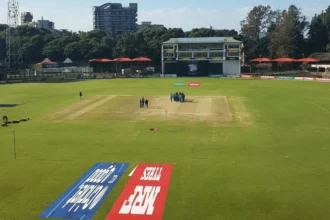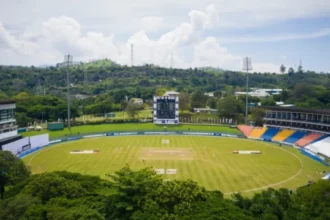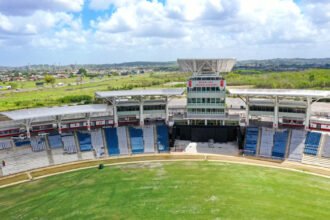
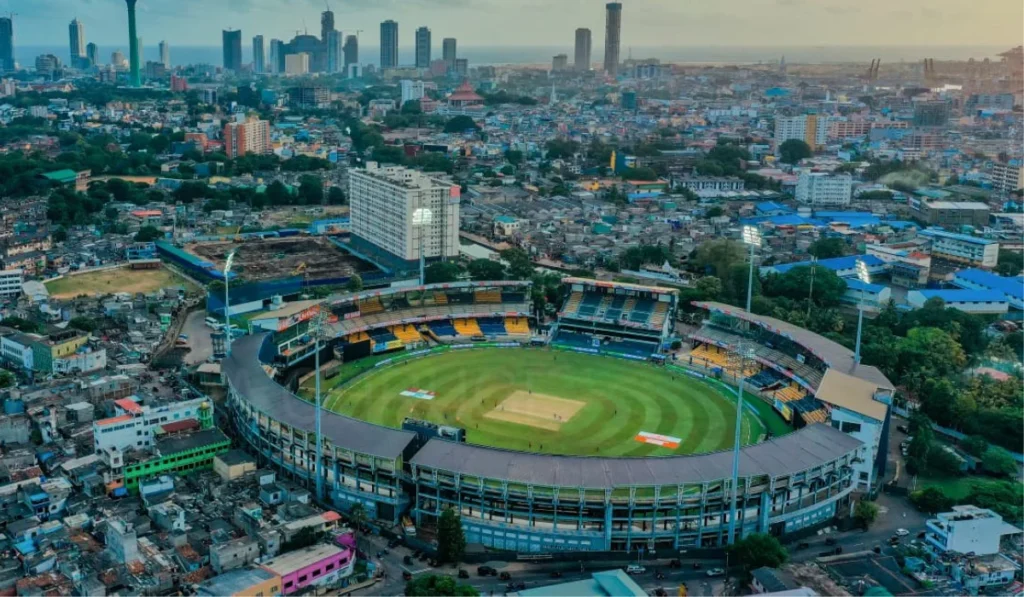
The R. Premadasa Stadium is one of Sri Lanka’s most important international cricket venues and a major sporting landmark in Colombo. Located in the Khettarama area of the Sri Lankan capital, the stadium has hosted Test matches, ODIs, T20Is, World Cup games, Asia Cup fixtures and major domestic competitions.
The ground is particularly famous for producing several memorable batting performances, including Sri Lanka’s remarkable 952/6 declared against India in 1997, which remains the highest team total in Test cricket history. It has also hosted major limited overs matches, including fixtures from the 1996 and 2011 Men’s Cricket World Cups and the 2012 T20 World Cup. Today, R. Premadasa Stadium remains an important venue for Sri Lankan cricket. It was also one of the principal Sri Lankan venues for the ICC Men’s T20 World Cup 2026, while the Lanka Premier League and domestic tournaments continue to use the stadium.
R. Premadasa Stadium Overview
The stadium was established in 1986 and was originally known as the Khettarama Cricket Stadium. It was renamed in 1994 in honour of former Sri Lankan President Ranasinghe Premadasa. ICC venue information has listed the stadium with a capacity of around 28,000, while more recent ICC material has described it as capable of accommodating up to 35,000 spectators following development and refurbishment.
R. Premadasa Stadium Quick Facts
| Feature | Details |
| Stadium Name | R. Premadasa Stadium |
| Official Name | R. Premadasa International Cricket Stadium |
| Former Name | Khettarama Cricket Stadium |
| Location | Khettarama, Colombo, Sri Lanka |
| Established | 1986 |
| Renamed | 1994 |
| Capacity | Up to 35,000 |
| Country | Sri Lanka |
| Main Sport | Cricket |
| Home Team | Sri Lanka |
| Owner/Operator | Sri Lanka Cricket |
| First ODI | Sri Lanka vs New Zealand, 1986 |
| First Test | Sri Lanka vs Australia, 1992 |
| First T20I | Sri Lanka vs India, 2009 |
R. Premadasa Stadium Location and Address
R. Premadasa Stadium is situated in Maligawatte/Khettarama, Colombo, Sri Lanka. It is located relatively close to central Colombo and is surrounded by several important roads, residential areas and sporting facilities. The stadium’s location has also contributed to its importance as a regular venue for Sri Lankan domestic and international cricket.
For visitors attending a match, Colombo provides several transport options, including road-based public transport and taxis. Match-day traffic can become heavier around the stadium, so spectators should allow additional travel time when attending popular international fixtures.
Also read this: Harare Sports Club | Pallekele International Cricket Stadium | Brian Lara Cricket Academy
History of R. Premadasa Stadium
The history of R. Premadasa Stadium is closely connected with the development of Sri Lankan cricket. Before construction, the area was used as a garbage dumping ground. According to Sri Lanka Cricket, the site was subsequently earmarked for an international cricket stadium and the complex was completed in 1986. The venue was initially called Khettarama Cricket Stadium. In 1994, it was renamed R. Premadasa Stadium after Ranasinghe Premadasa, the former President of Sri Lanka.
The ground hosted its first official international match in April 1986, when Sri Lanka played New Zealand in an ODI. Its first Test followed in 1992, when Sri Lanka played Australia. Over the years, the stadium became one of the principal venues for Sri Lanka’s international home matches. It has hosted matches in several major ICC tournaments, including the 1996 and 2011 Men’s Cricket World Cups, the 2002 Champions Trophy and the 2012 T20 World Cup.
Major Historical Milestones
| Year | Milestone |
| 1986 | Stadium established |
| 1986 | First ODI hosted |
| 1992 | First Test match hosted |
| 1994 | Stadium renamed R. Premadasa Stadium |
| 1996 | Hosted Cricket World Cup matches |
| 1997 | Sri Lanka scored 952/6 declared against India |
| 2002 | Hosted Champions Trophy matches and final |
| 2011 | Hosted Cricket World Cup matches |
| 2012 | Hosted T20 World Cup matches |
| 2020–21 | Major refurbishment completed |
| 2026 | Hosted ICC Men’s T20 World Cup matches |
R. Premadasa Stadium Capacity
The R. Premadasa Stadium capacity has changed over time because of redevelopment and refurbishment projects.
ICC venue information previously described the stadium as a 28,000-seater venue, while more recent ICC material states that it can accommodate up to approximately 35,000 spectators. Sri Lanka Cricket’s refurbishment project also added thousands of seats and upgraded spectator areas.
R. Premadasa Stadium Seating and Capacity
| Seating Area | Information |
| Main Stands | Large spectator sections and pavilion areas |
| Grandstand/Pavilion Areas | Premium and official seating facilities |
| Concrete Enclosures | Expanded during refurbishment |
| Additional Seats | Added during the 2020 refurbishment |
| Overall Capacity | Up to approximately 35,000 |
The exact usable capacity can vary depending on the match, safety arrangements and seating configuration.
R. Premadasa Stadium Pitch Report
The R. Premadasa Stadium pitch report can vary considerably depending on the format, weather, pitch preparation and stage of the match. In general, the Colombo surface can offer opportunities for batters when the pitch is settled, while spinners can become increasingly important as a match progresses. Limited-overs statistics also show a meaningful difference between first-innings and second-innings scoring.
One recent dataset covering matches through August 2026 records an ODI first-innings average of about 248 runs and a second-innings average of about 202 runs. For T20Is, the corresponding figures are approximately 152 and 137. These figures should be treated as historical averages rather than a prediction for an individual match.
Batting Conditions
Batters can score freely when the ball comes onto the bat well. The venue has also produced several large totals, particularly in ODIs and T20 cricket.
However, conditions can change as the innings progresses. Slow surfaces can make stroke-making more difficult, particularly against accurate spin bowling.
Pace Bowling Conditions
Fast bowlers can receive assistance with the new ball, particularly when atmospheric conditions provide movement. After the initial phase, bowlers generally need to rely more on changes of pace, cutters, accuracy and variations.
Spin Bowling Conditions
Spin has historically been an important factor at the venue. Experienced spinners can become increasingly effective when the pitch slows down. This is one reason why teams often consider their spin-bowling options carefully when playing in Colombo.
Dew and Weather
Colombo’s tropical climate can produce high humidity and rainfall. Evening matches can also experience dew, which may influence the grip available to bowlers. Rain has occasionally affected major tournaments at the venue. The 2025 Women’s Cricket World Cup, for example, saw several Colombo matches affected by rain, demonstrating how important weather can be in the capital.
Is R. Premadasa Stadium a Batting or Bowling Pitch?
It is difficult to classify R. Premadasa Stadium as exclusively a batting or bowling ground. The surface can support batting, particularly during the first innings when conditions are favourable, but spin and changes of pace can become influential. Recent statistics show that first-innings scoring has generally been higher than second-innings scoring in both ODIs and T20Is. Therefore, the pitch should be considered format- and condition-dependent rather than automatically labelled as either batting-friendly or bowling-friendly.
R. Premadasa Stadium Average Score
Historical averages provide useful context but should not be interpreted as a guaranteed par score for an upcoming match.
Format-Wise Average Scores
| Format | Average 1st Innings | Average 2nd Innings |
| ODI | 248.4 | 202.1 |
| T20I | 151.6 | 137.2 |
| LPL T20 | 153.6 | 137.5 |
R. Premadasa Stadium Records
R. Premadasa Stadium has produced some of the most remarkable records in Sri Lankan cricket.
Test Records
- The biggest record associated with the venue came in 1997 when Sri Lanka scored 952/6 declared against India. Sanath Jayasuriya scored 340 and Roshan Mahanama made 225, with the pair sharing a 576-run partnership for the second wicket. The team total remains the highest in Test cricket history.
- ESPNcricinfo’s ground records list Jayasuriya’s 340 as the highest individual Test score at the venue, followed by Roshan Mahanama’s 225.
- Rangana Herath’s 7/89 is listed among the best innings bowling performances at the ground, while Muttiah Muralitharan’s 9/60 remains the best match bowling performance recorded there.
ODI Records
- The stadium has also produced numerous significant ODI records.
- India’s 375/5 against Sri Lanka in 2017 is listed as the highest ODI team total at the venue. Kumar Sangakkara’s 169 against South Africa is the highest individual ODI score listed for the ground.
- Sanath Jayasuriya remains the leading ODI run-scorer at the ground with 2,514 runs, while Muttiah Muralitharan is listed as the leading ODI wicket-taker with 75 wickets.
T20I Records
- Bangladesh produced the highest T20I team total at the venue when they scored 215/5 against Sri Lanka in 2018.
- Luke Wright holds the highest individual T20I score at the ground with 99 not out, while Wanindu Hasaranga’s 4/9 against India in 2021 is among the standout bowling performances.
Major R. Premadasa Stadium Records
| Record | Player/Team | Score/Figures | Format | Opponent |
| Highest team total | Sri Lanka | 952/6d | Test | India |
| Highest individual score | Sanath Jayasuriya | 340 | Test | India |
| Best innings bowling | Rangana Herath | 7/89 | Test | Bangladesh |
| Best match bowling | Muttiah Muralitharan | 9/60 | Test | — |
| Highest ODI total | India | 375/5 | ODI | Sri Lanka |
| Highest ODI individual score | Kumar Sangakkara | 169 | ODI | South Africa |
| Highest T20I total | Bangladesh | 215/5 | T20I | Sri Lanka |
| Highest T20I individual score | Luke Wright | 99* | T20I | Afghanistan |
R. Premadasa Stadium Most Runs and Most Wickets
Several legendary Sri Lankan players have built strong records at the Colombo venue. In ODIs, Sanath Jayasuriya’s 2,514 runs are the highest individual aggregate at the ground. Muttiah Muralitharan leads the ODI wicket charts with 75 wickets.
For T20Is, Kusal Perera is among the leading run-scorers, while Wanindu Hasaranga has been particularly successful with the ball. ESPNcricinfo’s ground records also show Lasith Malinga and Dushmantha Chameera among the leading T20I wicket-takers at the venue.
Notable Ground Performers
| Player | Achievement | Format |
| Sanath Jayasuriya | 2,514 runs | ODI |
| Muttiah Muralitharan | 75 wickets | ODI |
| Kumar Sangakkara | 169, highest ODI individual score | ODI |
| Wanindu Hasaranga | 24 wickets listed in T20I ground records | T20I |
| Kusal Perera | 464 T20I runs listed in ground records | T20I |
| Rangana Herath | 7/89 | Test |
Matches Played at R. Premadasa Stadium
- R. Premadasa Stadium has hosted all three major men’s international formats: Tests, ODIs and T20Is.
- The first ODI at the ground was played in 1986, while the first Test was held in 1992. T20I cricket arrived at the venue in 2009 when Sri Lanka played India.
- The ground has also hosted women’s international cricket, domestic cricket and franchise competitions.
- Its modern calendar includes events such as the Lanka Premier League and Sri Lanka’s Major Club tournaments.
Famous Matches at R. Premadasa Stadium
Sri Lanka 952/6 Declared vs India
The 1997 Test between Sri Lanka and India is arguably the most historically significant match associated with the venue. Sri Lanka posted 952/6 declared, with Sanath Jayasuriya making 340 and Roshan Mahanama scoring 225.
India 375/5 vs Sri Lanka
India produced a huge ODI total of 375/5 against Sri Lanka in 2017. The innings remains the highest ODI team total recorded at R. Premadasa Stadium.
Bangladesh 215/5 vs Sri Lanka
During the 2018 Nidahas Trophy, Bangladesh chased 215/5 against Sri Lanka, making it the highest T20I team total recorded at the venue.
Sri Lanka 50 vs India
The 2023 Asia Cup final produced one of the most one-sided ODI results at the ground. Sri Lanka were dismissed for 50, with Mohammed Siraj taking 6/21, before India completed the chase.
R. Premadasa Stadium and ICC Tournaments
It hosted matches during the 1996 Cricket World Cup, 2011 Cricket World Cup, 2002 Champions Trophy and 2012 T20 World Cup. The venue also hosted major finals during the 2002 Champions Trophy and the 2012 T20 World Cup. In 2026, R. Premadasa Stadium again became a major ICC venue when India and Sri Lanka co-hosted the ICC Men’s T20 World Cup 2026.
The official ICC schedule included several group-stage games in Colombo, including Sri Lanka vs Ireland, Australia vs Ireland, Australia vs Zimbabwe, India vs Pakistan and Sri Lanka vs Zimbabwe. The stadium was also part of the floating arrangements for the first semi-final and final depending on qualification scenarios.
R. Premadasa Stadium Weather and Playing Conditions
The city’s tropical climate means players can encounter high humidity, cloud cover and sudden rain. Afternoon and evening showers can create interruptions, while wet conditions can make outfield movement difficult. Rain was particularly noticeable during the 2025 Women’s Cricket World Cup, when several matches at the venue were heavily affected or abandoned. For this reason, teams playing at R. Premadasa Stadium need to consider both pitch conditions and the weather forecast.
R. Premadasa Stadium Upcoming Matches
As of September 25, 2026, the major international and franchise tournaments scheduled at R. Premadasa Stadium earlier in 2026 have already taken place. The venue hosted several important matches during the ICC Men’s T20 World Cup in February and March 2026. It subsequently hosted the Lanka Premier League playoffs and final in August.
Domestic cricket has also continued at the ground. In September 2026, the venue hosted matches in Sri Lanka’s Major Club competitions, including the Major Club T20 final on September 16. Because international and domestic schedules can change, readers should verify the latest fixture list before planning a visit.
R. Premadasa Stadium Facilities
The stadium has undergone multiple infrastructure improvements over its history.
Sri Lanka Cricket’s major refurbishment included work on pavilions, staircases, lighting systems and spectator enclosures. The project also added thousands of seats to the complex.
Key facilities include:
- Player dressing rooms
- Practice and training areas
- Spectator seating
- Floodlights
- Media facilities
- Pavilion areas
- Match-day hospitality facilities
- Food and refreshment areas
- Stadium access and transport facilities
R. Premadasa Stadium Nearby Attractions
Visitors travelling to R. Premadasa Stadium can explore several attractions across Colombo before or after a cricket match.
Popular areas and attractions in Colombo include:
- Colombo Fort
- Pettah Market
- Galle Face Green
- Gangaramaya Temple
- Beira Lake
- Colombo National Museum
- Viharamahadevi Park
R. Premadasa Stadium vs Other Sri Lankan Cricket Grounds
| Stadium | City | Capacity | Major Formats | Notable Feature |
| R. Premadasa Stadium | Colombo | Up to 35,000 | Test/ODI/T20I | Major international venue |
| Galle International Stadium | Galle | Around 35,000 | Test/ODI/T20I | Famous Test venue |
| Pallekele International Cricket Stadium | Kandy | Around 35,000 | Test/ODI/T20I | Modern multi-format ground |
Capacity figures can vary according to configuration and source, so they should not be treated as permanent seating figures.
Why R. Premadasa Stadium Is Important to Sri Lankan Cricket
R. Premadasa Stadium occupies a unique position in Sri Lankan cricket because of its combination of history, capacity and international match experience. It has hosted matches across multiple generations of Sri Lankan cricket. From the team’s historic 952/6 Test innings in 1997 to major World Cup fixtures and modern T20 competitions, the venue has remained part of Sri Lanka’s international cricket calendar.
The ground has also provided the setting for memorable performances from players such as Sanath Jayasuriya, Muttiah Muralitharan, Kumar Sangakkara, Lasith Malinga and Wanindu Hasaranga. Its continued use for international tournaments and domestic competitions shows the stadium’s ongoing importance to Sri Lanka’s cricket infrastructure.
R. Premadasa Stadium: Key Facts at a Glance
| Category | Key Information |
| Location | Colombo, Sri Lanka |
| Established | 1986 |
| Former Name | Khettarama Cricket Stadium |
| Renamed | 1994 |
| Capacity | Up to 35,000 |
| Home Team | Sri Lanka |
| First ODI | 1986 |
| First Test | 1992 |
| First T20I | 2009 |
| Famous Record | Sri Lanka 952/6d vs India |
| Highest ODI Total | India 375/5 |
| Highest T20I Total | Bangladesh 215/5 |
| Major Events | World Cups, Champions Trophy, T20 World Cup |
Conclusion
The R. Premadasa Stadium is more than just a cricket ground in Colombo. Since opening in 1986, it has developed into one of Sri Lanka’s most important venues for international and domestic cricket. Its history includes the legendary 952/6 declared by Sri Lanka against India, major World Cup matches, Champions Trophy cricket, T20 World Cup fixtures and numerous memorable individual performances. The venue has also benefited from significant refurbishment and infrastructure improvements over the years.
FAQs
Q1. Where is R. Premadasa Stadium located?
R. Premadasa Stadium is located in the Khettarama/Maligawatte area of Colombo, Sri Lanka.
Q2. What is the capacity of R. Premadasa Stadium?
The stadium is capable of accommodating up to approximately 35,000 spectators, although historical ICC venue information has listed lower capacity figures depending on the stadium configuration.
Q3. Is R. Premadasa Stadium a batting-friendly ground?
The venue can support batting, but conditions vary. Historical data shows that first-innings scoring has generally been higher than second-innings scoring in both ODIs and T20Is. Spin can also play an important role as the match progresses.
Q4. What is the highest score at R. Premadasa Stadium?
Sri Lanka’s 952/6 declared against India in 1997 is the highest team total associated with the stadium and remains the highest Test team score in cricket history.
Q5. What is the average ODI score at R. Premadasa Stadium?
A 2026 ground-statistics dataset gives an average first-innings ODI score of approximately 248.4 and an average second-innings score of about 202.1. The figures are historical averages and can change as more matches are played.
Q6. Which team plays at R. Premadasa Stadium?
Sri Lanka uses R. Premadasa Stadium as one of its major international home venues. The stadium also hosts domestic and franchise cricket.