
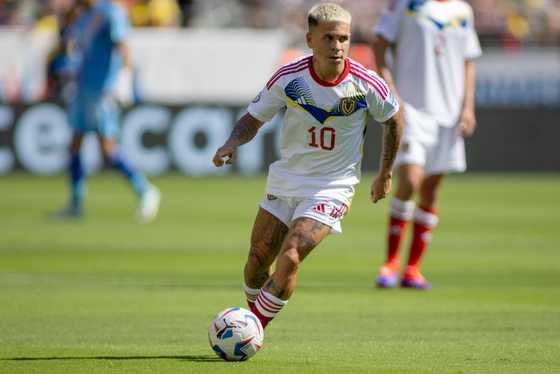
Football is usually associated with powerful athletes, tall defenders and towering goalkeepers, but height is far from the only physical characteristic that matters on the pitch. Some of the game’s most technically gifted players have been considerably shorter than the average professional footballer.
The shortest football players in 2026 provide another reminder of that fact. Players with heights around 160 cm, 165 cm or even below have competed professionally by relying on agility, balance, acceleration, close control and football intelligence.
The subject becomes even more interesting when we separate active footballers in 2026, short players at the 2026 FIFA World Cup, and historical record holders. These categories are not always the same. For example, César Yanis is officially listed at 1.60 metres and was the shortest player among the 1,248 players at the 2026 FIFA World Cup.
This guide looks at the shortest footballers, their heights, positions, careers and the reasons why being shorter can sometimes become an advantage rather than a weakness.
Note: Player heights can differ slightly between databases and historical sources. The rankings below should therefore be treated as a practical football reference rather than an official all-time height record.
What Is the Average Height of a Professional Football Player?
- There is no single official average height for every professional footballer because players compete in different positions and leagues. However, professional men’s football generally includes a wide range of body types.
- Goalkeepers and central defenders are usually among the tallest players because height and reach can be valuable when defending crosses, taking aerial challenges and protecting the goal.
- Midfielders, wingers and attacking players can often be shorter because their roles place a greater emphasis on movement, ball control, acceleration and changes of direction.
- A short player does not automatically have a disadvantage. In some situations, a lower centre of gravity can make it easier to turn quickly and maintain balance while carrying the ball.
Average Football Player Height by Position
| Position | Typical Physical Profile | Why Height Can Matter |
| Goalkeeper | Usually taller | Reach, saves and crosses |
| Centre-back | Usually tall | Headers and aerial duels |
| Full-back | Medium to tall | Pace, strength and defending |
| Midfielder | Wide range | Mobility and ball control |
| Winger | Often shorter or medium | Agility and acceleration |
| Forward | Wide range | Movement, finishing and strength |
The important point is that these are general tendencies rather than rules. Football has produced successful players who fall well outside the typical physical profile of their position.
Also read this: Football Players Born in 2007 | Football Players Born in 2008 | Football Players Contract Expiry 2026
Top Shortest Football Players 2026
Determining the shortest football player in the world in 2026 requires some caution because there is no universally maintained worldwide database ranking every active professional player solely by height.
Some very short players are active in domestic leagues that receive relatively little international coverage, while other famous names are much easier to verify.
Historical databases and football publications have listed players such as Marcin Garuch and Élton José Xavier Gomes among the shortest professional footballers, while Daniel Villalva is currently listed at 1.59 m and playing for Boca Unidos in 2026.
For a 2026 article, it is therefore more useful to divide the subject into active short players, World Cup players and historical record holders.
Short Football Players to Know in 2026
| Player | Listed Height | Position | Status/Context |
| Marcin Garuch | Around 153–154 cm | Midfielder | Frequently cited among the shortest professionals |
| Élton José Xavier Gomes | Around 153–154 cm | Attacking midfielder | Famous historical short professional |
| Daniel Villalva | 159 cm | Attacking midfielder/Winger | Active professional in 2026 |
| César Yanis | 160 cm | Winger/Attacking midfielder | Shortest player at 2026 World Cup |
| Bernard | Around 164 cm | Winger/Midfielder | Active with Atlético Mineiro |
| Lionel Messi | Around 170 cm | Forward/Attacking midfielder | Famous short football superstar |
| Vitinha | Around 169 cm | Midfielder | Shorter modern elite midfielder |
| Marco Verratti | Around 165 cm | Midfielder | Famous short midfielder |
Daniel Villalva’s listed height is 1.59 m, and his 2026 club record places him with Boca Unidos after previous spells in Argentina, Mexico and Brazil.
Bernard is another useful example of an active short footballer. Atlético Mineiro’s official profile lists him as a midfielder and confirms his return to the club in 2024, with a contract running through December 2027. Brazilian competition records also show him playing for Atlético Mineiro in 2026.
1. Marcin Garuch
Marcin Garuch is one of the names most frequently associated with lists of the world’s shortest professional footballers.
He has been listed at approximately 153–154 cm, depending on the source. That puts him around the 5-foot mark and makes him exceptionally short by professional football standards.
Garuch’s position as a midfielder is particularly interesting because midfielders need to receive the ball under pressure, turn quickly and compete in crowded areas.
His example demonstrates why height cannot be used as the only measure of a footballer’s physical ability.
Marcin Garuch Quick Facts
| Category | Details |
| Player | Marcin Garuch |
| Height | Approximately 153–154 cm |
| Position | Midfielder |
| Nationality | Polish |
| Known for | Extremely short stature and professional career |
Some football publications describe Garuch as the shortest professional footballer on record, while other sources place Élton at a similar height. Because historical measurements are not always standardized, it is safer to describe him as one of the shortest professional footballers rather than claim an uncontested world record.
2. Élton José Xavier Gomes
Brazilian attacking midfielder Élton José Xavier Gomes, commonly known as Élton, is another famous name in discussions about the shortest professional football players.
He has frequently been listed at approximately 153–154 cm.
Élton built a lengthy professional career despite being dramatically shorter than many of the defenders he faced.
His playing position also makes his case interesting. An attacking midfielder needs to operate between lines, receive passes in tight spaces and turn away from pressure.
Élton Quick Facts
| Category | Details |
| Player | Élton José Xavier Gomes |
| Height | Approximately 153–154 cm |
| Position | Attacking midfielder |
| Nationality | Brazilian |
| Known for | Long professional career despite exceptional height disadvantage |
Different databases sometimes give slightly different measurements for Élton, which is common when researching historical player heights.
3. Daniel Villalva
Daniel Villalva is one of the more relevant names when discussing shortest active football players in 2026.
The Argentine player is listed at 1.59 m and has played as an attacking midfielder and winger.
Villalva came through River Plate’s youth system and later played in several countries, including Argentina, Mexico and Brazil.
His 2026 career record lists Boca Unidos as his current club after a 2025–26 spell with Gimnasia y Tiro.
Daniel Villalva Quick Facts
| Category | Details |
| Full name | Daniel Alberto Villalva Barrios |
| Height | 159 cm |
| Position | Attacking midfielder / winger |
| Nationality | Argentine |
| Youth club | River Plate |
| 2026 club | Boca Unidos |
Villalva’s career is a useful example of how technical ability can allow a player with a very small physical frame to compete professionally for many years.
4. César Yanis
If the question is specifically about the shortest player at the 2026 FIFA World Cup, the answer is César Yanis.
The Panama international stands at 1.60 m (5 ft 3 in) and was the shortest player among the 1,248 players selected for the tournament.
Yanis plays primarily as a winger or attacking player and has developed a reputation for using speed, agility and technical ability rather than physical size.
His height became one of the most interesting statistical details of the 2026 World Cup.
César Yanis Quick Facts
| Category | Details |
| Player | César Yanis |
| Height | 160 cm |
| Height in feet | 5 ft 3 in |
| Nationality | Panama |
| Position | Winger / attacking midfielder |
| 2026 club | Cobresal |
| World Cup | 2026 |
| World Cup ranking | Shortest player |
Yanis was listed with Chilean club Cobresal during the 2026 World Cup period. Reports based on FIFA’s squad information identified him as the shortest player in the tournament.
His height also created a remarkable contrast with some of the tournament’s tallest players.
5. Bernard
Brazilian international Bernard is another excellent example of a relatively short elite footballer.
He is commonly listed at approximately 1.64 m and has played as a winger or attacking midfielder.
Bernard became well known during his first spell at Atlético Mineiro and later played in Europe for Shakhtar Donetsk and Everton.
He eventually returned to Atlético Mineiro in 2024, where he remains under contract.
Bernard Quick Facts
| Category | Details |
| Full name | Bernard Anício Caldeira Duarte |
| Height | Approximately 164 cm |
| Position | Winger / midfielder |
| Nationality | Brazil |
| Current club | Atlético Mineiro |
| Major achievement | 2013 Copa Libertadores |
Brazilian competition records show Bernard appearing for Atlético Mineiro in the 2026 Série A season, confirming his continuing professional status.
6. Marco Verratti
Marco Verratti has long been one of the best examples of how a relatively short midfielder can dominate against much larger opponents.
He is commonly listed at around 165 cm.
Verratti’s game has historically depended more on technique, balance, anticipation and passing than physical dominance. His ability to receive the ball in crowded midfield areas helped make him one of the most recognizable deep-lying midfielders of his generation.
7. Lionel Messi
Lionel Messi is not one of the shortest professional footballers ever, but he is one of the most famous short football players in football history.
Messi is generally listed around 170 cm.
At that height, he is considerably shorter than many elite defenders and forwards, but his career demonstrates how little height alone can tell us about football ability.
His low centre of gravity, close control, acceleration and ability to change direction became major components of his playing style.
Messi’s example is particularly important because it moves the conversation away from simply asking, “Who is the shortest football player?” and toward a more useful question: Can a shorter player succeed at the highest level?
The answer is clearly yes.
Shortest Football Players Under 160 cm
Players below 160 cm are exceptionally unusual in professional men’s football.
The category includes several historic names, while Daniel Villalva sits just below the 160 cm threshold and César Yanis is exactly 160 cm.
Players Around or Under 160 cm
| Player | Height | Position | Context |
| Marcin Garuch | ~153–154 cm | Midfielder | Historical/professional |
| Élton José Xavier Gomes | ~153–154 cm | Attacking midfielder | Historical/professional |
| Daniel Villalva | 159 cm | Attacking midfielder/Winger | Active in 2026 |
| César Yanis | 160 cm | Winger | 2026 World Cup |
The most important distinction is between historical height records and current active status. Some of the shortest names ever recorded are no longer playing professional football.
Shortest Football Players Under 165 cm
The 160–165 cm range contains more recognizable professional players.
Table: Short Footballers Around 165 cm
| Player | Height | Position | Country |
| César Yanis | 160 cm | Winger | Panama |
| Bernard | ~164 cm | Winger/Midfielder | Brazil |
| Marcelo Flores | 164 cm | Midfielder | Canada |
| Jeremy Antonisse | 164 cm | Attacker | Curaçao |
| Marco Verratti | ~165 cm | Midfielder | Italy |
Marcelo Flores and Jeremy Antonisse were among the next shortest players at the 2026 World Cup after Yanis. Reports based on FIFA squad data put both at 1.64 m.
Shortest Football Players Under 170 cm
Once the height limit reaches 170 cm, the list becomes considerably larger.
Many highly successful professional players fall into this category.
Examples
| Player | Approx. Height | Position | Country |
| César Yanis | 160 cm | Winger | Panama |
| Bernard | 164 cm | Winger/Midfielder | Brazil |
| Marco Verratti | ~165 cm | Midfielder | Italy |
| Marcelo Flores | 164 cm | Midfielder | Canada |
| Jeremy Antonisse | 164 cm | Attacker | Curaçao |
| Lionel Messi | ~170 cm | Forward | Argentina |
| Vitinha | ~169 cm | Midfielder | Portugal |
This is why describing a player as simply “short” can be misleading. A 160 cm winger, a 165 cm midfielder and a 170 cm forward all have very different physical profiles.
Shortest Football Players by Position
Shortest Goalkeepers
- Goalkeeper is probably the most difficult position for a very short footballer.
- The goalkeeper needs to cover a large area, react to crosses and reach shots aimed toward the upper corners.
- Height provides an obvious advantage in these situations.
- That does not mean short goalkeepers cannot play football, but the demands of the position make extremely short professional goalkeepers rare.
Shortest Defenders
Defenders face similar challenges, particularly centre-backs.
A centre-back may be required to defend:
- Crosses
- Corners
- Free kicks
- Long balls
- Target forwards
- High balls into the penalty area
However, full-backs have historically offered more opportunities for shorter players because pace, acceleration and one-on-one defending are particularly important.
Shortest Midfielders
Midfield is where many of football’s famous short players have succeeded.
The position rewards:
- Balance
- Passing
- Awareness
- Agility
- Close control
- Quick turns
- Decision-making
Players such as Verratti, Xavi and other technically gifted midfielders have shown that physical size does not determine midfield quality.
Shortest Wingers
Wingers can benefit from being shorter because their roles frequently involve one-on-one situations.
A winger needs to:
- Receive the ball near the touchline.
- Face a defender.
- Change direction quickly.
- Accelerate into space.
- Deliver a cross or cut inside.
A low centre of gravity can make those movements easier.
César Yanis is an excellent 2026 example. His 1.60 m height did not prevent him from reaching the World Cup with Panama.
Shortest Forwards
- Forwards come in many physical shapes.
- Some are tall target men who specialize in aerial play. Others are smaller forwards who rely on movement, acceleration and finishing.
- Short attackers can be difficult to track because they may operate between defenders rather than competing directly for high balls.
Shortest Football Players at the 2026 FIFA World Cup
The 2026 FIFA World Cup provides one of the clearest modern examples of how different footballing body types can coexist.
The shortest player in the tournament was Panama’s César Yanis at 1.60 m.
Shortest Players at the 2026 World Cup
| Rank | Player | Country | Height | Position |
| 1 | César Yanis | Panama | 160 cm | Winger |
| 2 | Marcelo Flores | Canada | 164 cm | Midfielder |
| 2 | Jeremy Antonisse | Curaçao | 164 cm | Attacker |
| 4 | Nestory Irankunda | Australia | 165 cm | Attacker |
| — | Other players | Various | 166 cm+ | Various |
Reports using FIFA’s squad information identified Yanis at 1.60 m, Flores and Antonisse at 1.64 m and Irankunda at 1.65 m.
The contrast at the tournament was particularly striking because Austria goalkeeper Florian Wiegele was listed at 2.05 m.
That created a 45 cm difference between the shortest and tallest players in the tournament.
Famous Short Football Players in History
Some of the most influential footballers ever were shorter than the typical modern professional.
Table: Famous Short Footballers
| Player | Approx. Height | Position | Major Achievement |
| Lionel Messi | ~170 cm | Forward | Multiple Ballon d’Or awards and World Cup |
| Diego Maradona | ~165 cm | Attacking midfielder | 1986 World Cup winner |
| Marco Verratti | ~165 cm | Midfielder | Elite European midfielder |
| Bernard | ~164 cm | Winger | Copa Libertadores winner |
| Lorenzo Insigne | ~163 cm | Winger | European Championship winner |
| Santi Cazorla | ~168 cm | Midfielder | Spanish international |
| Xherdan Shaqiri | ~169 cm | Winger | Major European club career |
| Alexis Sánchez | ~169 cm | Forward | Elite European career |
These players demonstrate that height is only one variable in a much larger physical and technical equation.
Lionel Messi: One of the Most Famous Short Footballers
Messi’s career is probably the strongest modern argument against judging football potential by height.
At around 170 cm, Messi is not exceptionally tiny compared with some historic professional players, but he is short compared with many elite forwards and defenders.
His playing style made excellent use of his physical profile.
Messi could:
- Change direction rapidly
- Keep the ball close to his feet
- Accelerate over short distances
- Stay balanced while being challenged
- Carry the ball through crowded areas
- Combine technical skill with exceptional awareness
His low centre of gravity became one of the characteristics commonly associated with his dribbling.
But it would be an oversimplification to say Messi succeeded simply because he was short. His career was built on an extraordinary combination of technical ability, football intelligence, acceleration, balance, passing, finishing and decision-making.
Diego Maradona and the Success of Short Players
- Diego Maradona was another famous footballer whose height was considerably below that of many defenders.
- At approximately 165 cm, Maradona built his reputation around technique, creativity and extraordinary ball control.
- His 1986 FIFA World Cup campaign remains one of the most famous individual tournament performances in football history.
- Maradona’s ability to maintain possession while being challenged by taller and stronger defenders demonstrated the value of balance and close control.
- His career also illustrates an important principle:
- Being physically smaller does not necessarily mean being physically weak.
- A shorter player can still possess tremendous strength, acceleration and balance.
Why Are Short Football Players Often Good at Dribbling?
- There is a reason many famous short footballers have been exceptional dribblers.
- One important factor is the centre of gravity.
- A shorter athlete generally has a lower centre of mass. In football, that can help with rapid changes of direction and balance, although it is not a guarantee of better dribbling.
- Other factors are equally important.
Low Centre of Gravity
A lower centre of gravity can help a player remain balanced when changing direction.
Quick Changes of Direction
Shorter players may be able to move their body rapidly from one direction to another, which can be useful in one-on-one situations.
Close Ball Control
Players who operate close to the ground can develop exceptional control over the ball.
Balance
Balance becomes particularly important when an attacker is challenged physically.
Acceleration
Many shorter attacking players combine agility with explosive acceleration.
Tight-Space Ability
A smaller body profile can be useful when operating between several defenders.
However, height alone does not create a great dribbler. Technique, coordination, training and football intelligence remain much more important.
Advantages of Being Short in Football
Being shorter can offer several potential advantages.
1. Lower Centre of Gravity
This can help with balance and changes of direction.
2. Agility
Short players can be highly effective in situations requiring rapid movement.
3. Close Ball Control
Players such as Messi and Verratti demonstrate how smaller players can become extremely comfortable receiving the ball under pressure.
4. Quick Turns
A short player can sometimes pivot rapidly and escape a defender.
5. Acceleration
Many smaller wingers and attacking midfielders are capable of explosive acceleration.
6. Movement in Tight Spaces
Shorter players can be effective between defensive lines.
7. Technical Football
Players who cannot rely on physical size often develop other qualities that help them compete.
Disadvantages of Being Short in Football
There are also genuine disadvantages.
Table: Advantages vs Disadvantages
| Potential Advantage | Potential Disadvantage |
| Low centre of gravity | Less aerial reach |
| Agility | Difficulty winning some headers |
| Quick turns | Possible disadvantage in physical duels |
| Close control | Less reach |
| Acceleration | Can struggle against taller opponents in aerial situations |
| Tight-space movement | Reduced advantage during set pieces |
The effects depend heavily on position.
A 160 cm winger may be perfectly suited to his role, while a 160 cm goalkeeper would face a very different set of challenges.
Does Height Matter in Football?
Yes, but it does not matter equally for every player.
Height can be particularly valuable for:
- Goalkeepers
- Centre-backs
- Target forwards
It can be less important for:
- Wingers
- Attacking midfielders
- Creative midfielders
- Some full-backs
The best football teams usually need different physical profiles.
A tall centre-back can provide aerial strength while a shorter midfielder can provide ball retention and quick combinations.
Football is therefore not a competition to find the tallest possible squad.
It is about combining complementary characteristics.
Shortest vs Tallest Football Players
The 2026 World Cup provided a dramatic example of this contrast.
César Yanis was listed at 1.60 m, while Austria’s Florian Wiegele was listed at 2.05 m. That is a difference of 45 centimetres.
Height Comparison
| Category | Player | Height |
| Shortest 2026 World Cup player | César Yanis | 160 cm |
| Tallest 2026 World Cup player | Florian Wiegele | 205 cm |
| Difference | — | 45 cm |
Both body types can exist within the same sport because their positions and responsibilities are completely different.
Shortest Football Players vs Average Footballers
It is useful to remember that “short” is relative.
A player who is extremely short for a goalkeeper may be completely normal for a winger.
General Height Comparison
| Category | Approximate Range |
| Extremely short professional player | Under 160 cm |
| Very short footballer | 160–165 cm |
| Short footballer | 165–170 cm |
| Around 170 cm | 170–175 cm |
| Taller footballer | 180 cm+ |
| Very tall footballer | 190 cm+ |
These are descriptive categories, not official FIFA classifications.
Shortest Football Players Under 5 Feet 5 Inches
Five feet five inches is approximately 165 cm.
This group includes several notable professional players.
Table
| Player | Approx. Height | Position | Country |
| César Yanis | 5’3″ | Winger | Panama |
| Daniel Villalva | 5’2.5″ | Attacking midfielder | Argentina |
| Bernard | Around 5’5″ | Winger | Brazil |
| Marcelo Flores | 5’5″ | Midfielder | Canada |
| Jeremy Antonisse | 5’5″ | Attacker | Curaçao |
| Marco Verratti | Around 5’5″ | Midfielder | Italy |
Height conversions are rounded and may differ by one inch depending on the source and rounding method.
Shortest Active Football Players in 2026
The word active is important.
Historical lists contain several players under 160 cm, but many of those footballers are retired.
For 2026, names such as Daniel Villalva, César Yanis and Bernard provide more useful examples of current professional players. Villalva’s 2026 record lists him with Boca Unidos, while Bernard continues with Atlético Mineiro.
Active Short Footballers to Watch
| Player | Height | Position | 2026 Context |
| Daniel Villalva | 159 cm | Attacking midfielder/Winger | Boca Unidos |
| César Yanis | 160 cm | Winger | Panama/Cobresal |
| Bernard | ~164 cm | Winger/Midfielder | Atlético Mineiro |
| Marcelo Flores | 164 cm | Midfielder | Canada/club football |
| Jeremy Antonisse | 164 cm | Attacker | Curaçao/club football |
| Lionel Messi | ~170 cm | Forward | Inter Miami |
This list should not be interpreted as an official worldwide ranking of every active professional footballer. There is no universally standardized database that provides a definitive height ranking across every league.
Shortest Football Players of All Time
When discussing the shortest football players ever, the ranking becomes much harder to establish.
One widely cited list places Marcin Garuch at approximately 153 cm and Élton at approximately 154 cm, while other historical sources give slightly different figures.
Jafal Rashed Al-Kuwari is another famous historical example at 155 cm. FBref lists him at 155 cm and records his career with Qatar and Al Sadd.
Historical Short Footballers
| Player | Listed Height | Position | Era/Status |
| Marcin Garuch | ~153–154 cm | Midfielder | Professional football |
| Élton José Xavier Gomes | ~153–154 cm | Attacking midfielder | Professional football |
| Jafal Rashed Al-Kuwari | 155 cm | Midfielder | Retired |
| Daniel Villalva | 159 cm | Attacking midfielder/Winger | Active in 2026 |
| César Yanis | 160 cm | Winger | Active in 2026 |
| Bernard | ~164 cm | Winger/Midfielder | Active in 2026 |
Jafal Rashed Al-Kuwari officially retired from professional football after his long career with Al Sadd and Qatar. FBref lists his height as 155 cm.
Because old player measurements are not always standardized, claims such as “the shortest footballer ever” should be made carefully.
Does Being Short Help Young Football Players?
Being short should not automatically be considered an advantage or disadvantage in youth football.
Young players develop at different rates, and physical growth can vary significantly during adolescence.
A young player who is currently shorter than teammates may later grow substantially.
For youth development, coaches should consider:
- Technical ability
- Ball mastery
- Speed
- Coordination
- Decision-making
- Positioning
- Game awareness
- Work rate
- Mental strength
- Long-term development potential
A player should not be excluded simply because he is shorter at a particular age.
The careers of Messi, Maradona, Verratti and other shorter players demonstrate that elite football can reward technical qualities that are not directly related to height.
Why Height Should Not Be the Only Selection Factor
Football is a multidimensional sport.
A player may be shorter but possess exceptional:
- First touch
- Passing
- Dribbling
- Acceleration
- Balance
- Vision
- Anticipation
- Tactical intelligence
Likewise, a tall player may have excellent aerial ability but struggle with quick turns or close control.
The best footballers combine their physical and technical qualities in ways that suit their position.
What Can Short Football Players Learn From Messi?
Messi’s career offers several useful lessons for shorter players.
Develop Ball Control
If you cannot dominate physically, technical security becomes even more valuable.
Improve Your First Touch
A good first touch allows a player to escape pressure before an opponent can use physical strength.
Work on Acceleration
Short-distance acceleration can be extremely useful for beating defenders.
Learn to Change Direction
Agility becomes particularly valuable in one-on-one situations.
Improve Decision-Making
Knowing when to pass, dribble or move is more important than height.
Use Your Body Correctly
A shorter player can still protect the ball effectively by positioning his body between the defender and the ball.
Final Verdict
The world of football proves that there is no single physical template for success.
The shortest football players in 2026 range from exceptionally small professionals to globally famous stars who are simply shorter than average. César Yanis stands out as the shortest player at the 2026 FIFA World Cup at 1.60 m, while historical names such as Marcin Garuch, Élton and Jafal Rashed Al-Kuwari show just how short a professional footballer can be.
The most important lesson is that height is only one part of a footballer’s profile.
A shorter player can compensate with:
- Agility
- Balance
- Acceleration
- Close ball control
- Dribbling
- Passing
- Positioning
- Football intelligence
- Technical quality
At the same time, height remains valuable in specific roles, particularly for goalkeepers and centre-backs.
The 2026 World Cup demonstrated the extreme range of footballing physiques particularly well. César Yanis was listed at 1.60 m, while Austria goalkeeper Florian Wiegele stood at 2.05 m, creating a 45 cm difference between the shortest and tallest players in the tournament.
Ultimately, football is not won by the tallest player or the shortest player. It is won by players who can use their individual physical and technical qualities effectively.
That is why the stories of the shortest football players in the world remain so fascinating: they prove that being small does not mean thinking small, playing small or achieving small things on the football pitch.
FAQs
Q1. Who is the shortest football player in 2026?
There is no universally accepted worldwide ranking of every active professional footballer by height. However, César Yanis was the shortest player at the 2026 FIFA World Cup at 1.60 m (5 ft 3 in).
Q2. Who is the shortest soccer player in the world?
Historical sources commonly identify players such as Marcin Garuch and Élton José Xavier Gomes among the shortest professional footballers, with reported heights around 153–154 cm. Because historical measurements differ between sources, there is no universally agreed single record holder.
Q3. Who was the shortest player at the 2026 World Cup?
Panama’s César Yanis was the shortest player at the 2026 FIFA World Cup. He was listed at 1.60 m.
Q4. How tall is César Yanis?
César Yanis is listed at 1.60 metres, or approximately 5 feet 3 inches.
Q5. Who is the shortest famous footballer?
There are several candidates depending on the definition. Maradona, Messi, Verratti and Bernard are among the most famous shorter players, while Marcin Garuch and Élton are much shorter but less globally famous.
Q6. Is Lionel Messi one of the shortest football players?
Messi is short compared with many elite footballers, but he is not among the very shortest professional players ever. He is generally listed at around 170 cm.
Q7. Can short players become professional footballers?
Absolutely. Professional football has produced many successful players under 170 cm, including elite attackers and midfielders.
Q8. What is considered short height for a football player?
There is no official definition. In men’s professional football, a height below approximately 170 cm is often considered relatively short, while players below 160 cm are exceptionally uncommon.
Q9. Are midfielders usually shorter than defenders?
Generally, yes. Centre-backs often benefit more from height because of aerial challenges, while midfielders can benefit from agility and close control.
Q10. Does height matter in professional football?
Height matters, but its importance depends heavily on position. It can be particularly valuable for goalkeepers and centre-backs, while technical and agile players can succeed at shorter heights.