
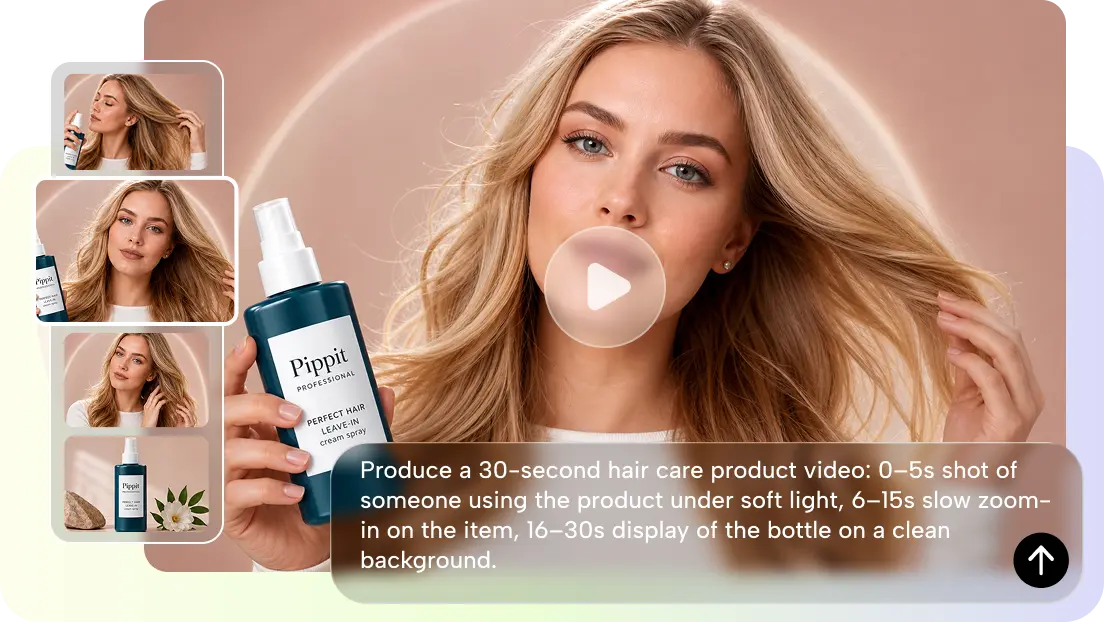
Product videos should have clear details, as viewers make their judgment of products based on what they see. Scenes are more believable thanks to accurate materials, lighting, and movement. It can be problematic if surfaces are poorly defined, as this can reduce the credibility of the visualization and appeal of the product. Realistic rendering conveys shape, depth, texture, and physicality. Pippit’s AI-driven creative tools assist in creating promotional content.
Understand the Visual Elements Behind Realistic Product Rendering
Clear direction for the materials, lighting, framing, and movement is the first step to realistic rendering. When prompts describe visible characteristics, an AI video generator will be able to better interpret them. Fabric requires discernable weave, and metal requires controlled reflections and highlights. Transparent, reflections, refraction, and believable edges are all necessary for glass. Plastic can be matte, shiny, transparent, rough, or overlaminated. The direction of the light will determine which textures and contours will remain visible. The distance of the camera also determines which features are visually emphasized. The direct descriptions provide Pippit with more guidance as to the desired look of the product.
Describe Product Materials and Surface Qualities Clearly
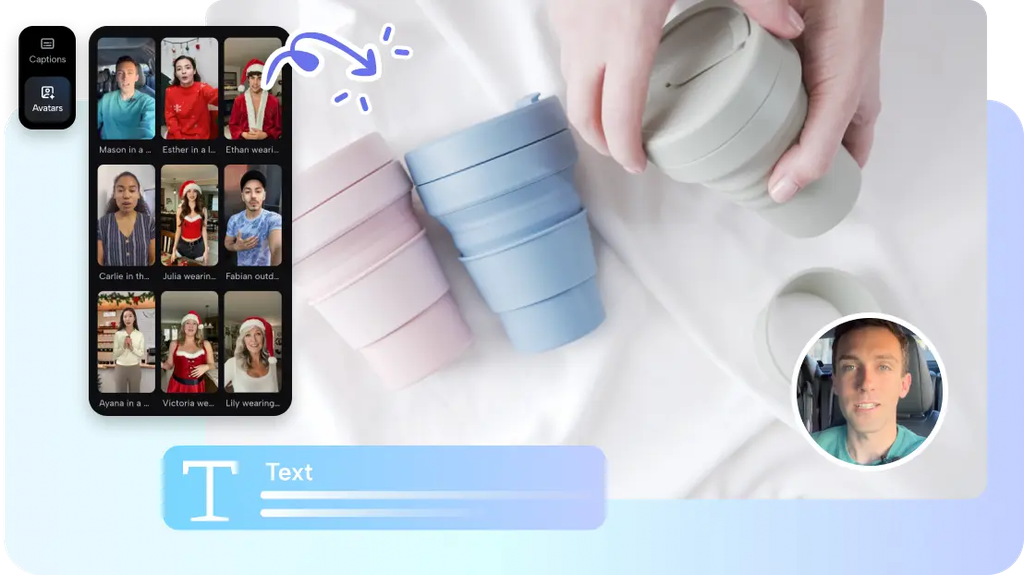
Product descriptions should set up material qualities that can be seen but don’t give contradictory instructions. Prompting for finish, texture, reflectivity, and surface behavior can yield stronger visual results with Seedance 2.5. The use of generic words such as premium material offers only a basic visual guide. Specific terms such as ‘brushed aluminium’ or ‘woven fabric’ provide better guidance. Explain the appearance of matte, polished, transparent, textured, layered, or reflective surfaces. If applicable, refer to grain, seams, pores, ridges, coatings, or molded details. Material instructions should be recommended to complement the product’s actual design and not for the sake of including unnecessary features. Lighting directions should also state what happens to surfaces when they are lit. Some highlights may require control on glossy products, while matte packaging will demand softer highlights. Relevant descriptions will minimize ambiguity and help create a cohesive product identity.
Use Lighting and Composition to Reveal Important Features
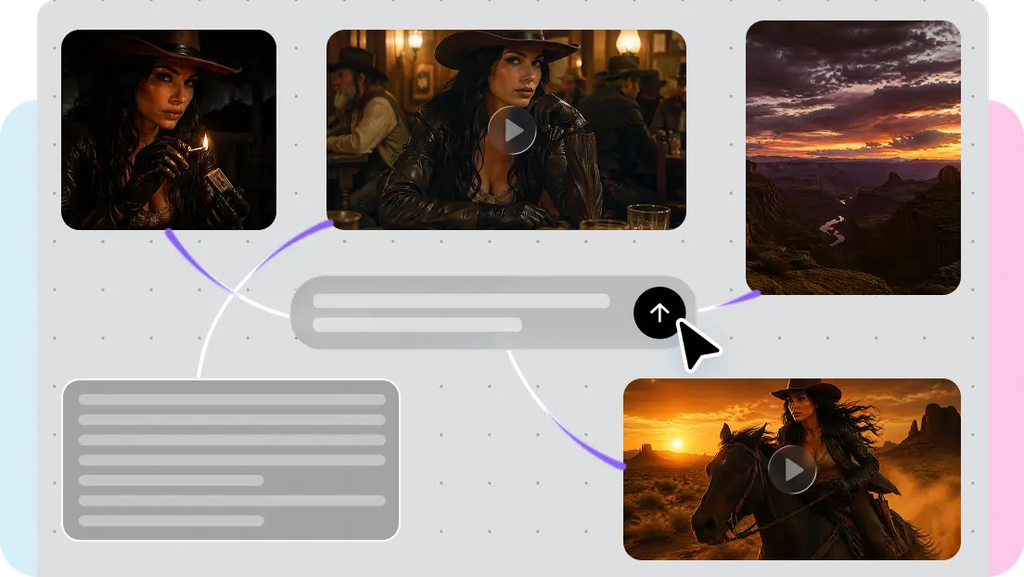
Lighting can show edges, contours, variations in texture and construction. Highlight and controlled shadows can be used to create form with a directional key light. Less harsh lighting can help to retain surface detail without overpowering contrast. Reflections can convey depth in polished metal, glass, and shiny surfaces. Close compositions are good if the viewer needs to look at the fine details of the product. Wider shots give form, environment, scale, and context. Slow camera movement can lead from a unique detail to the overall product. The background should complement the product and not be overcrowded with objects that compete with the product. Good compositions make the featured product the dominant focus in the series.
Key Rendering Instructions for Product-Focused Prompts
Use these prompt elements to establish clear visual priorities:
- Material description: Specify the surface properties of the product.
- Texture and finish: Refer to appropriate grain, reflectivity, transparency, or layering.
- Lighting direction: Comment on the source of lighting and the information that lighting provides.
- Detail priority: Figure out what detail is the focus of the most visual attention.
- Distance of the camera: Use close-ups to show detail or distant shots to show context.
- Background context: choose an environment for the proposed presentation.
- Movement behaviour: Movement that shows form but doesn’t hide the details.
Steps to Create Lifelike Product Details Using Seedance 2.5 Realistic Rendering
Step 1: Get started with the tool
- Sign up for Pippit through your Google, TikTok, or Facebook account.
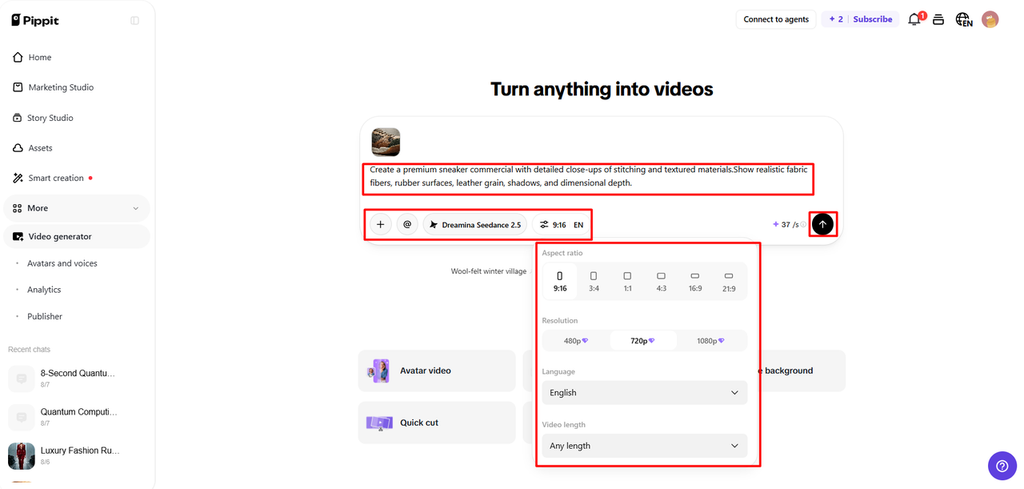
- Navigate to “More” on the left-side menu and click “Video generator”.
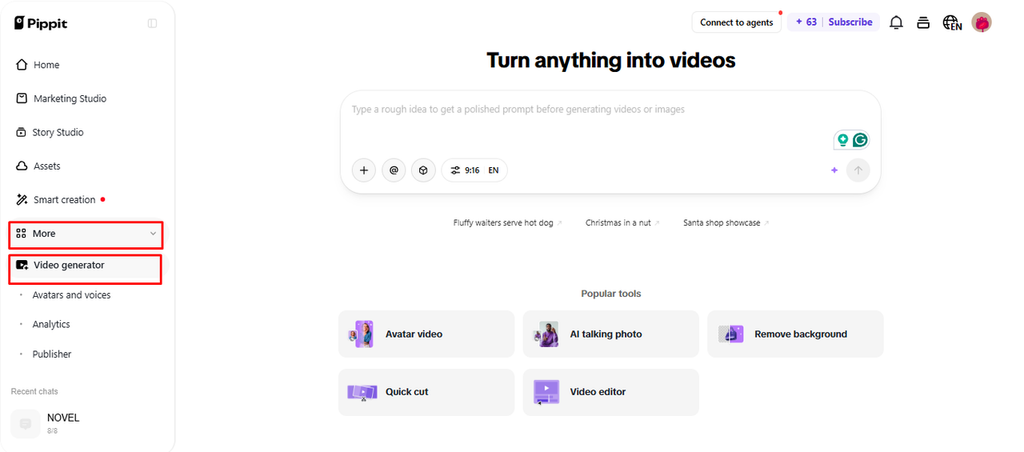
- Select “Dreamina Seedance 2.5” for video generation.
- Write a detailed prompt describing the product, its materials, surface details, lighting, and environment.
- Include clear visual instructions for textures, reflections, shapes, and other product characteristics you want to highlight.
- Select your desired video length, language, subtitles, and aspect ratio.
- Click “+” to upload product images or videos from your device, phone, Dropbox, or a link. You can also select available assets.
- Click “Generate” to create your product video.
Step 2: Generate the video
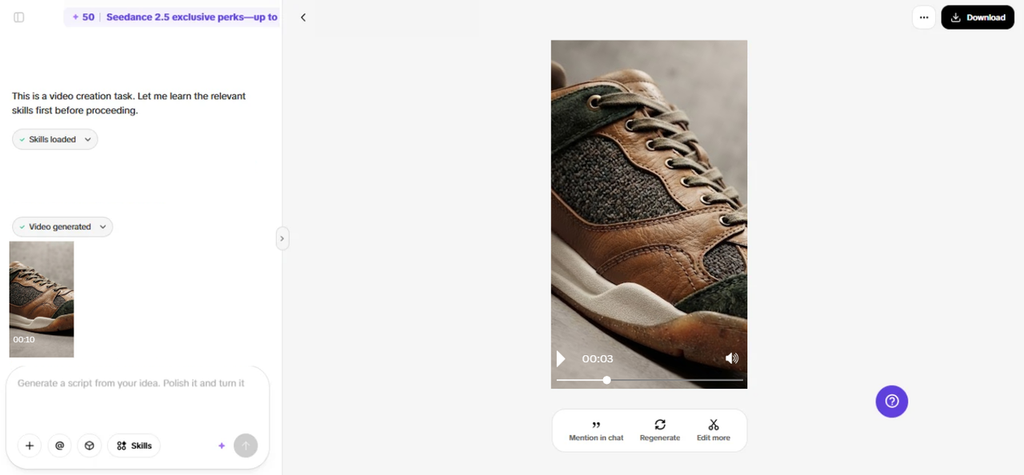
- Once you click “Generate,” Pippit creates a video based on your product description and reference inputs.
- Seedance 2.5 interprets the visual details in your prompt to create a rendered presentation of the product.
- Review the generated draft to examine product details, materials, lighting, and the overall visual presentation.
Step 3: Edit & export
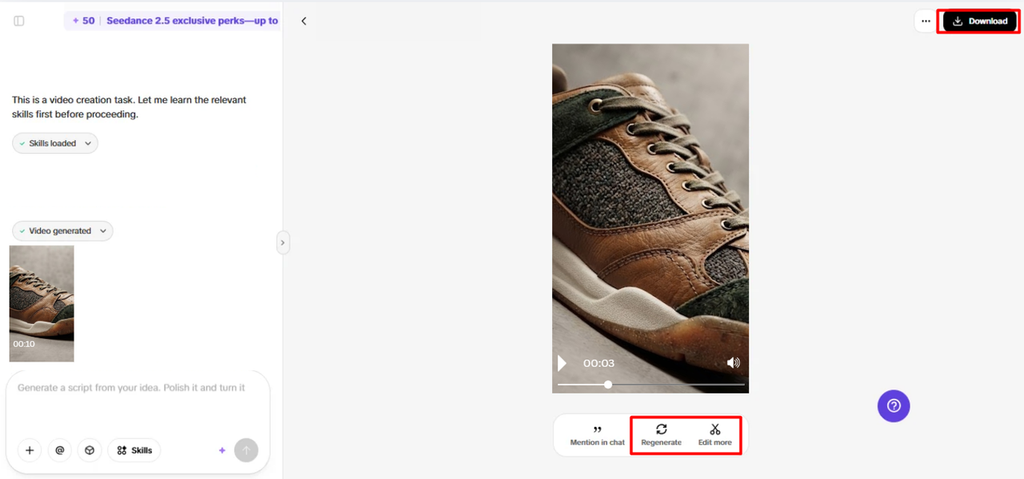
- Select “Download” from the top-right corner to save the result, or click “Regenerate” to create a new version.
- Click “Edit more” below the video to continue customizing the generated content.
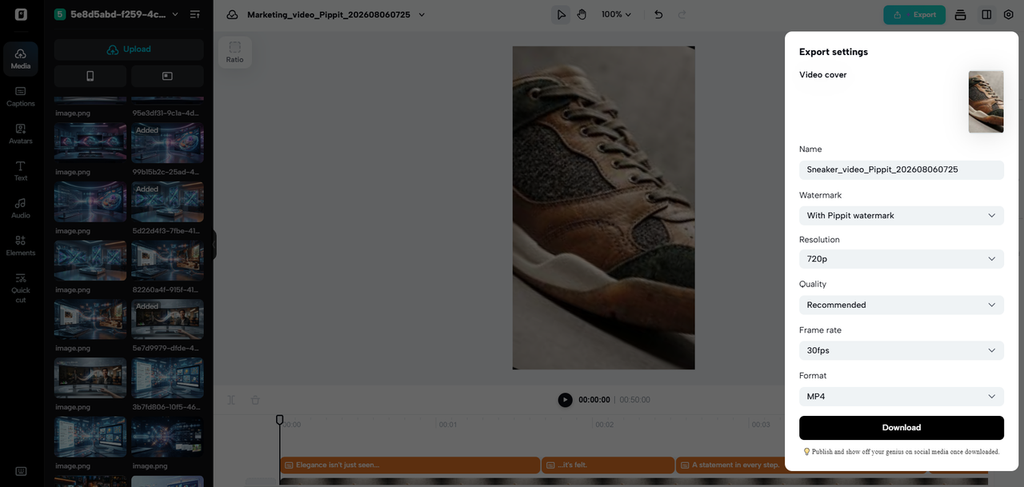
- Add or adjust captions, product text, colors, filters, effects, and other visual elements.
- Include background music or make further refinements to support your product presentation.
- Click “Export” when the video is complete.
- Choose “Publish” for social media sharing or “Download” to save the video with your selected export settings.
Guide Product Appearance with Relevant Reference Inputs
Reference images and videos are used to give further visual context prior to generation. Product photographs can help to explain the package, form, size, styling, and direction of presentation. Select references that reinforce one clear visual concept instead of unrelated directions. References across multi-format can help maintain consistency of campaign assets. Make sure to watch footage before locking it in as product direction. Ensure consistency in surfaces, logos, proportions, colors, and packagings. The scene should be guided by references, and there should not be too much visual complexity.
Combine Close-Ups with Contextual Visual Moments
Product videos have different uses for detail shots and wider scenes. Begin with a prominent detail, shape, or texture. Then move towards interaction, application, or lifestyle context as appropriate. A larger setting can be used to show scale and can indicate the setting. The camera should move in a smooth manner so that the product features are still identifiable. Any product interaction should be used to enhance understanding, and not to distract from the topic. Conduct a full product composition that emphasizes visual identity.
Refine Product Videos for Different Creative Formats
Adaptations of the product content are often necessary for the different channels of ads, social media, storefronts, and landing pages. Choose aspect ratios based on the location and viewing conditions of the image. Vertical framing works well for many social media formats that are designed with mobile in mind and for short promotional content. Bigger layouts are better for larger display areas and some product pages. Pippit offers captioning, text, alignment, filters, effects, and presentation controls. Green screen editing can substitute appropriate backgrounds for various campaign settings. Product visibility/viz hierarchy should be maintained with background changes. Check each version for the intended display size before exporting. Look for readability, cropping, surface clarity, lighting balance, and composition. Defining product information should be retained in the format of the final exports.
Conclusion
Product visuals for Lifelike require control over the material, lighting, texture, composition, and movement. Prompt instructions are clear and provide information about what details should be paid attention to and what surfaces should look like. Appropriate references can help reinforce consistency between product scenes and promotional variations. Pippit offers features to create, improve, edit, and export high-quality marketing videos. However, careful inspection is necessary, as some generated visuals may need corrections or regeneration. Effective visual direction turns product information into persuasive promotional material.