
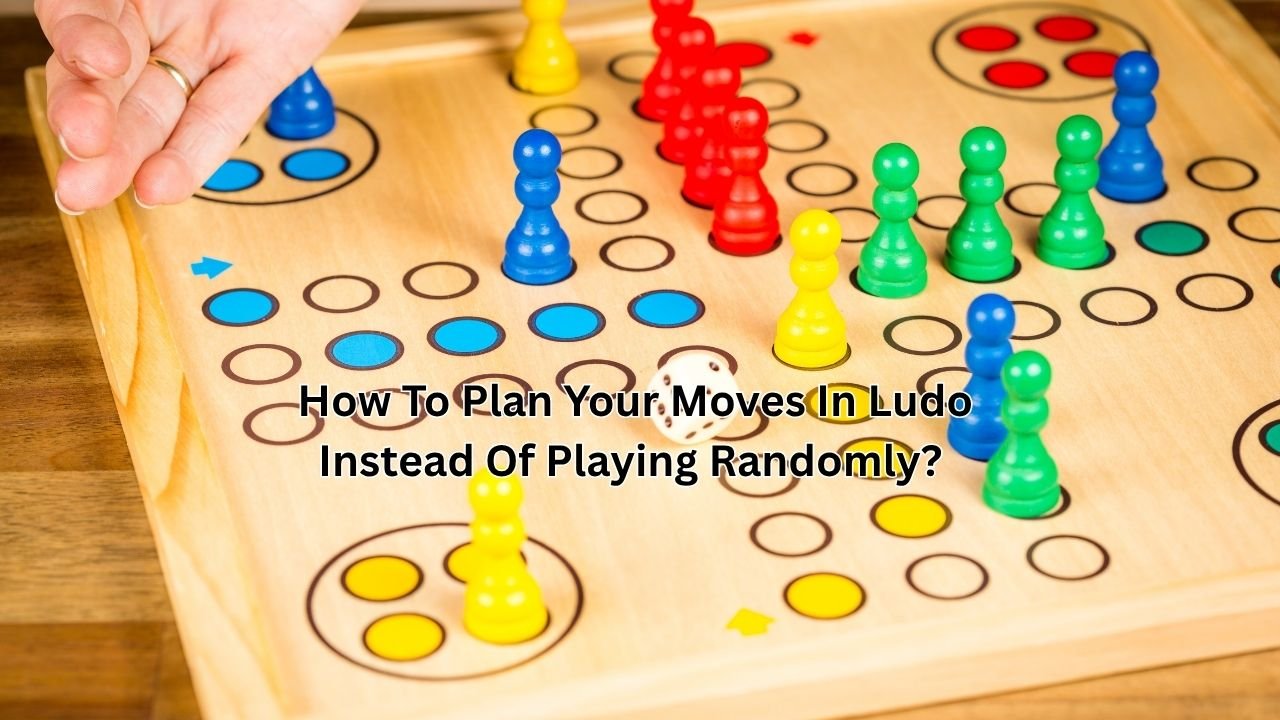
Ludo may appear quite easy at first glance. We throw the dice, move our pieces and try to get to the safe zone before our competitors. However, once the game gets to the point when it is competitive, any move becomes an occasion to create something new or to endanger our pieces.
Rather than move any piece at random, we can treat Ludo as a game which requires a certain strategy, skills of proper planning and decision-making. While it is the dice that show us what numbers we have got, it is we who choose the way to use these numbers. When playing Ludo, whether on a real board or online Ludo on platforms like Zupee, we can learn to assess our opportunities properly.
Why Should We Plan Our Moves In Ludo?
The random move may sometimes be successful, but it offers us little control over the final positioning of our tokens. A more effective way would be to analyze the potential that a particular move has and then choose a token. It will help us think about:
- Which token to move
- Which token is the most exposed
- Whether we need to attack the opponent
- Whether we should get closer to the finish line
- Whether we need to have several possible moves for the next turn
It is impossible to predict all dice rolls, and that is why an effective Ludo game does not mean prediction.
1. Look At The Whole Board Before Moving
It is one of the easiest things that we can do wrong by only thinking about the piece that we intend to move. Before doing a move, it is advisable that we take a quick look at the entire board. We will be able to see where our pieces are and where the opponent’s pieces are. This will also help us identify future important squares after our move. For instance, moving one piece seems to be advantageous. But another piece can be close to an opponent that we can use to take it.
2. Avoid Focusing On Just One Token
Shifting one token repeatedly might appear to be the quickest way to get back home. But focusing our efforts only on one particular token might reduce our flexibility in the position.
Gaining several tokens will provide us with additional options when playing future turns. Even if one token becomes restricted, threatened, or cannot move effectively, other tokens might still have a chance to advance. It does not imply that we must shift every token equally. We need to achieve a balance between advancing tokens and generating effective alternatives.
3. Consider Safety Before Speed
The proximity of a token to home is always attractive, but this is not the only thing that must be considered. It is also important to consider the safety of the token from the opponent.
A token that is many steps ahead but in a vulnerable position is not as good as a slightly slower token in a safe position. Questions to ask before proceeding include:
- Does this token have a chance of being captured by the opponent?
- Is there a safer spot for this token?
- Would moving this token leave another token vulnerable?
- Can this move leave a token in a better position in the next move?
Thinking about safety as well as development will bring balance to our decisions.
4. Capture Opportunities
Capturing a token by our opponent alters the position of the Ludo game. Whenever the dice presents us with a chance to capture, we need to determine whether it is worthwhile or not. A capture will:
- Return one of the opposing tokens to its starting zone.
- Hinder the opposition in their advance.
- Generate additional room for our tokens.
- Alter the immediate dynamics on the board.
But it would be wrong to assume that all captures are necessarily good moves. A situation where our token will become exposed after capturing an opposition token may call for some rethinking.
5. Think About The Next Turn
Good decision making goes beyond just the single roll of the dice. Wherever possible, one needs to consider how their position would appear following the move.
For instance, consider two tokens which can both be moved using a certain dice value; one ends up in a marginally favorable position while the other creates various movement possibilities for the next round. The latter choice is the one offering more flexibility. While one cannot predict the dice value for the next move, they can arrange their tokens in a way that maximizes their usefulness.
6. Use Safe Positions Strategically
However, safe positions may be helpful in Ludo games as well. As per the rules of the specific game, there could be certain squares that would ensure protection of your token from being captured by the opposing player. Instead of considering these squares as the end of your game journey, you can use these positions to your advantage by:
- Ensuring protection of a valuable token of yours.
- Waiting for a more favorable chance.
- Minimizing your exposure to the neighboring opponents.
- Preparing for the next move.
Does This Strategy Work In Online Ludo?
The same rules apply when playing online Ludo on Zupee. It may alter the game interface but does not affect decision making. Observing positions in Ludo played online may also become easier as the board as well as available positions are represented in digital form.
But at any rate, we have to avoid moving on autopilot, that is, we have to choose the most obvious choice among the available options. The task is to evaluate all the possible moves and choose the best one based on our position.
Wrapping Up!
The game of Ludo will always have to do with the roll of the dice, but good decision-making will be able to play a part in how we use the possibilities that we have. Through the analysis of the board, the handling of the pieces, the risk taking, and planning ahead, we will be able to make our gameplay more calculated as opposed to just playing randomly. Platforms like Zupee provide a fun opportunity for us to play skillful Ludo games.